
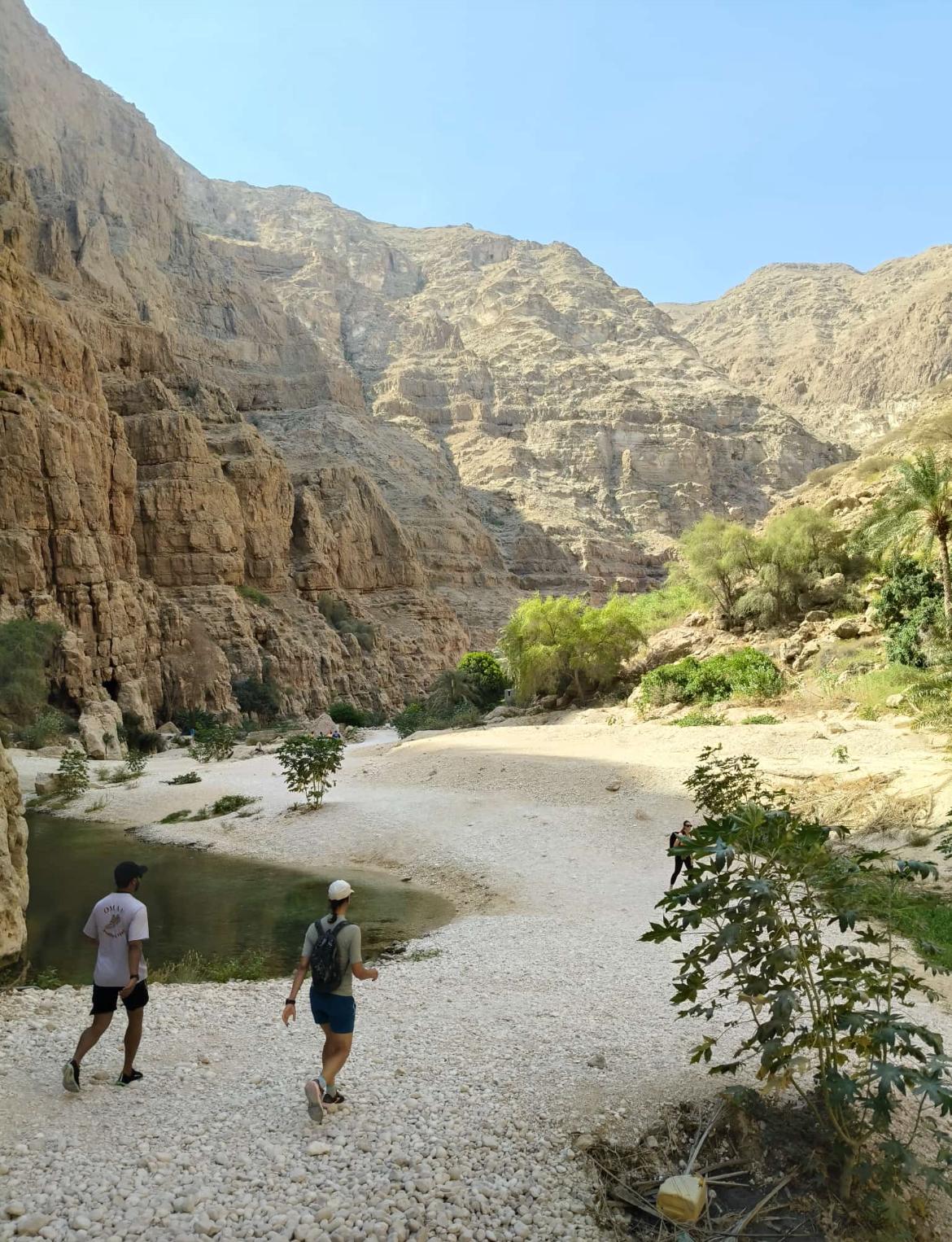
A Journey Through Mountains, Deserts, and Wadis with Runners Who Became in love with Oman
When our runners arrived from Switzerland in Muscat last September, they came with questions: What will the desert really feel like? Can we handle the heat? Will the terrain be too technical?
Days later, as they watched the sun set over Jebel Akhdar’s terraced mountains one last time, those questions had transformed into stories, stories of dawn runs across silent dunes, of laughter echoing through palm-shaded wadis, and of that moment when you round a rocky corner and suddenly the turquoise waters of a hidden pool appear before you.
This is trail running in Oman. And this is what happened when we ran it together.
The Land That Runs With You
Oman doesn’t reveal itself all at once. It unfolds slowly, generously, one landscape at a time.
Palm Groves and Ancient Paths: Birkat Al Mouz
Before the mountains, before the desert, we found our rhythm in Birkat Al Mouz, a 10 to 15-kilometer run through one of Oman’s most beautiful oases.
This is where date palms tower overhead, their fronds creating shifting patterns of light and shadow on the trail. Where ancient falaj irrigation channels, some over a thousand years old, still carry water with the quiet efficiency of centuries. Where abandoned stone houses with their distinctive wooden doors stand as reminders of village life from another era.
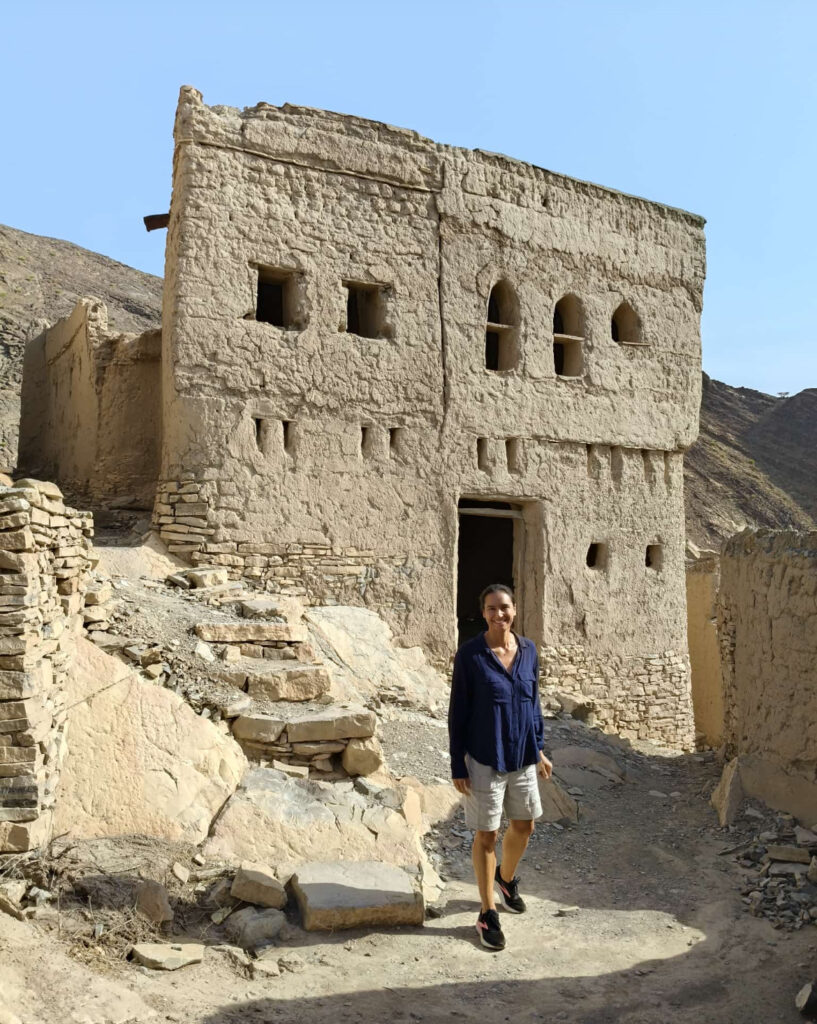
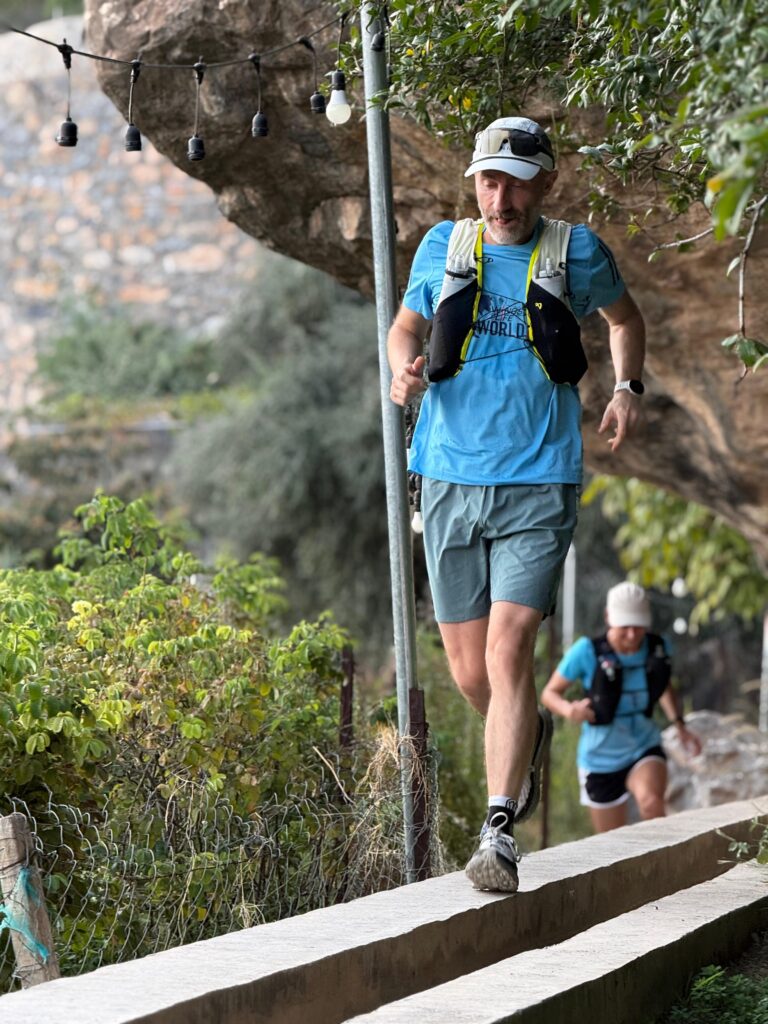
The terrain here was gentle enough to let them find their stride, technical enough to keep them engaged. Our runners pushed the pace, treating it as a proper training run. Sometimes they took it slower, cameras out, stopping to photograph the interplay of ruins and greenery, the way morning light caught the water in the channels.
It was the perfect introduction to Omani trail running: beautiful, cultural, challenging but not overwhelming. By the time they finished, legs warm and spirits high, we knew they were ready for what came next.
The Mountains: Ancient Villages in the Sky
Then came Jebel Akhdar—the “Green Mountain”—and the real test began.
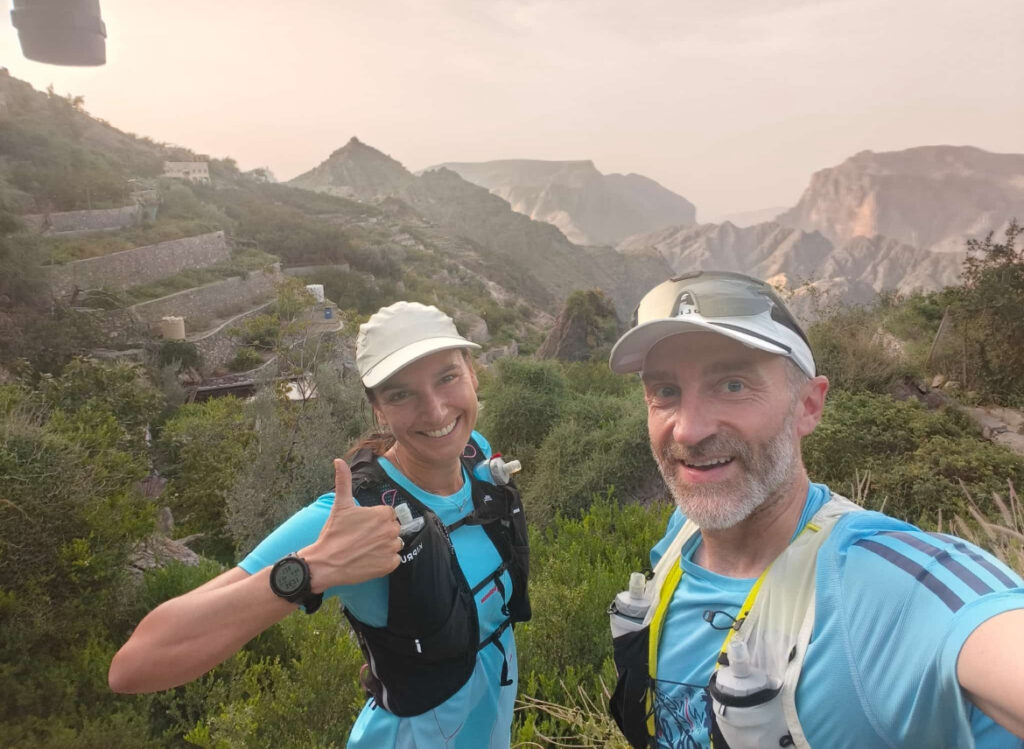
Twenty kilometers through terrain that demands everything: technical attention for the rocky paths, cardiovascular fitness for the elevation, and mental toughness when the trail just keeps climbing. Stone villages cling to cliffsides like they’ve grown from the rock itself. Terraced farms cascade down impossible slopes where roses and pomegranates somehow thrive at 2,000 meters elevation.
We started early afternoon when the mountain air was cool. The trails wound through centuries-old ruins, past stone walls that had stood for generations, beneath fig trees whose roots gripped bare rock. The light painted the limestone cliffs in shades of amber and rose.
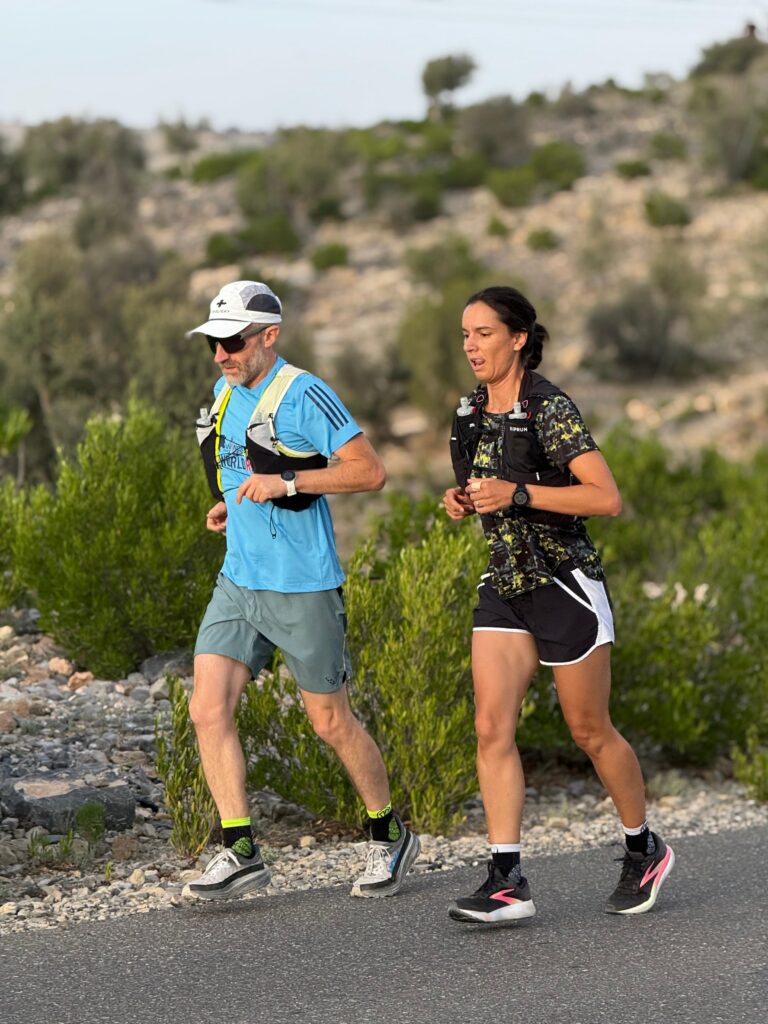
This was the kind of running that asks for your full attention, technical descents where every footfall matters, steep ascents where your lungs burn and your legs question your choices. Our runners found a steady rhythm and held it for hours. Some areas needed to be hiked, the steepest sections, no shame in it, saving energy for the runnable parts.
Between stone walls and beneath fruit trees, they found our rhythm. Sometimes running together, sometimes spreading out along the trail, each person finding their own conversation with the mountain.
By noon, we gathered for a mountain picnic lunch, sprawled on rocks with views that stretched to distant peaks. The food tasted better than it had any right to the way it always does when you’ve truly earned it. Twenty kilometers in Jebel Akhdar isn’t just a run. It’s a conversation with the mountain, and the mountain doesn’t make it easy. But what you get in return the views, the sense of accomplishment, the stories you’ll tell that makes every challenging step worth it.
The Desert: Silence and Sand
Then came the Sharqiya Sands, and everything changed.There’s a particular quality to running in the desert that’s hard to describe until you’ve felt it, the way your feet sink slightly with each step, how the dunes seem close but take forever to reach, the absolute silence broken only by breathing and the soft whisper of sand shifting.
“The best part for us, for sure, was the desert runs,” Tomas said with unmistakable enthusiasm. “Amazing experience, first time… hopefully not the last.”
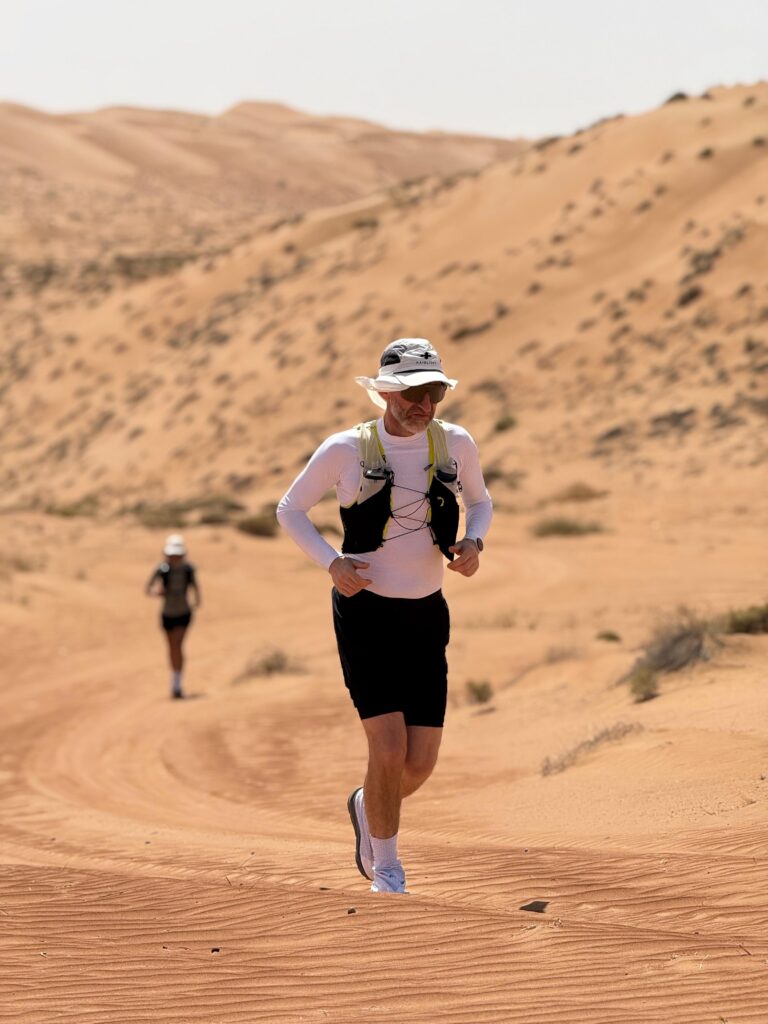
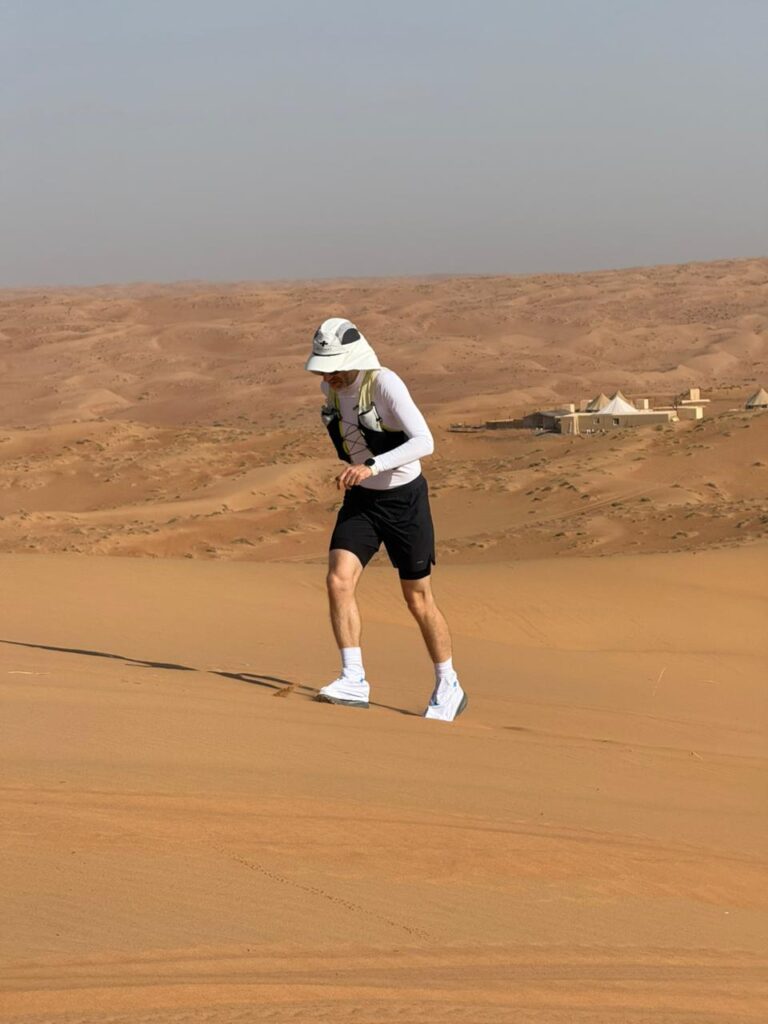
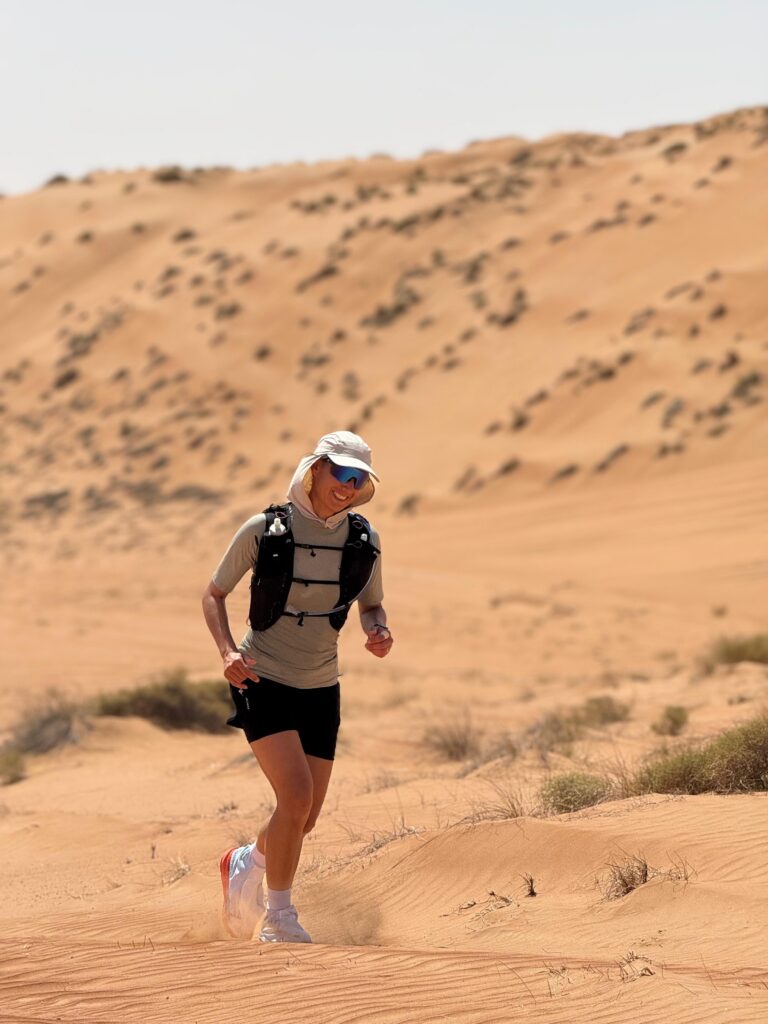
The first desert challenge came early: 7:30 AM departure from their camp in Al Wasil for an 18-kilometer journey across the sands to our camp. Our runners attacked the dunes, powering up the steep faces. Sometimes they took it steady, knowing that running in sand is a different beast entirely, it takes longer, demands more, humbles even the fittest.
What struck everyone was the vastness. The sense of being utterly alone in an endless landscape, except you weren’t alone. Your companions were spread across the dunes like colorful dots against the golden expanse, and our support team was there too, marking the course and following at a distance to ensure no one got lost.
This was late October, and the desert doesn’t apologize for its heat. At 39 degrees Celsius, these runners braved the elements like champions, covering all 18 kilometers through conditions that demanded respect. But they came prepared. Before the trip, we’d provided detailed briefings on mandatory and suggested gear, and for the desert run, that meant sand gaiters, sun protection, and proper kit to handle the exposure.
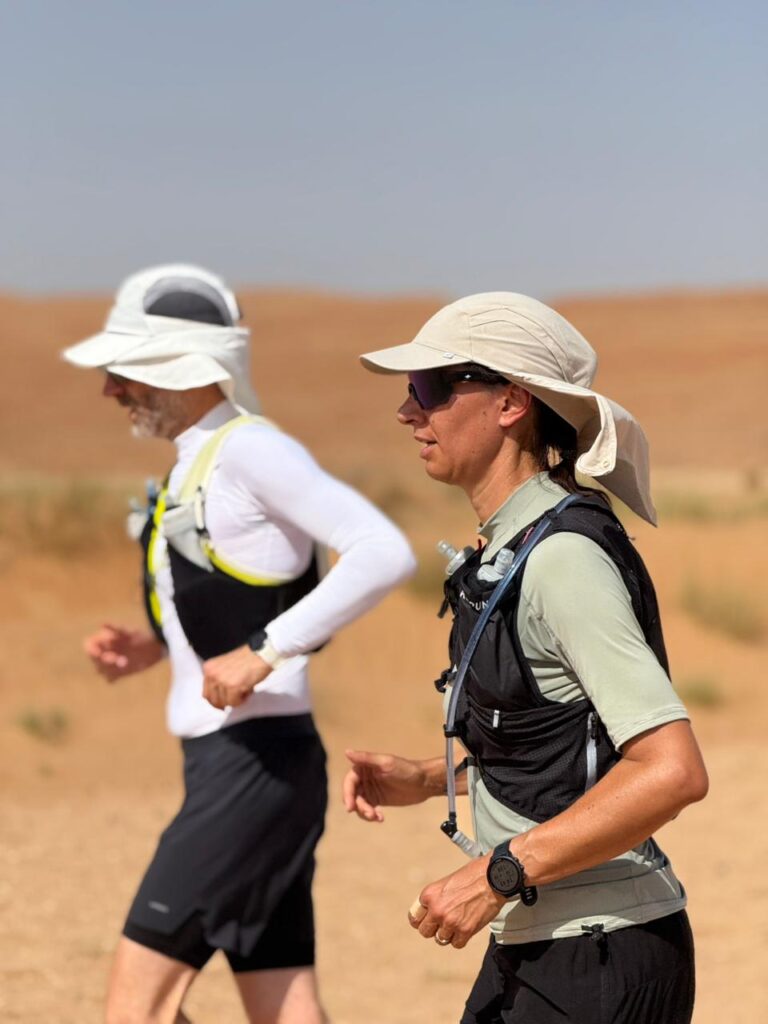
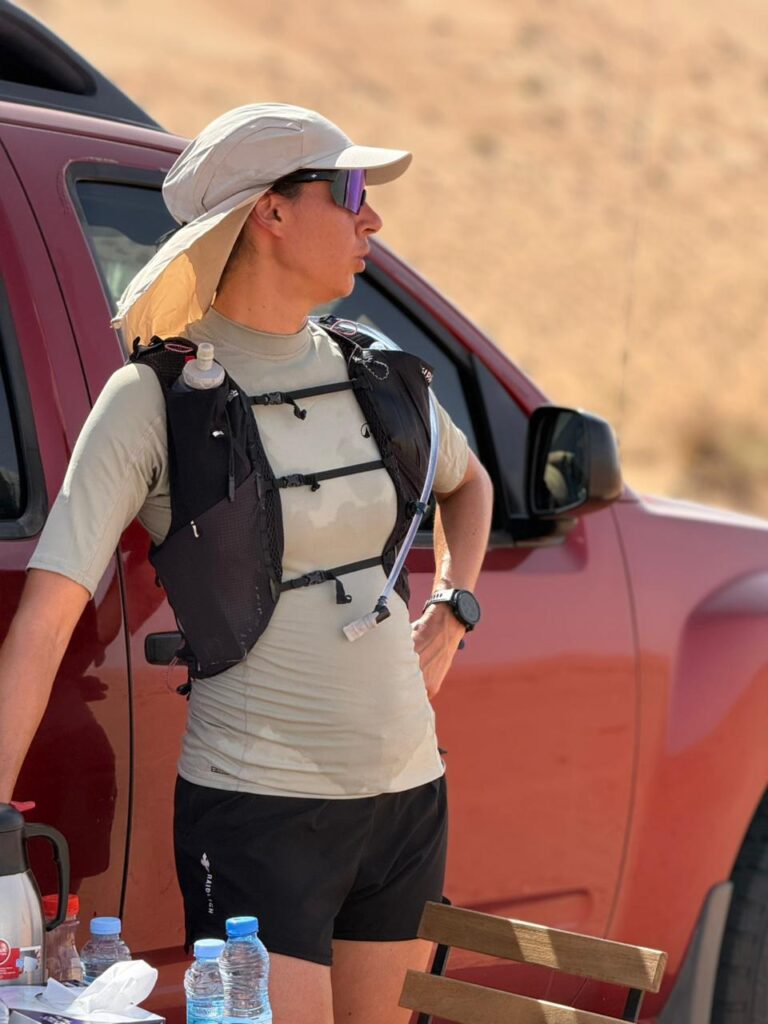
The support made the difference. At strategic checkpoints, runners could refill water bottles, catch some shade, have fruits and gather themselves before pushing on. And always, somewhere ahead across the golden expanse, the knowledge that our desert camp waited with cold drinks and warm smiles.
“I felt ultra secure, ultra secure,” Tomas emphasized when recalling the support system. “Not a complaint in the world.”
But the most magical desert run came the next morning. We woke before dawn for light refreshments, coffee, tea, pastries, just enough to fuel us. By 6:30 AM they were moving across the dunes in that precious window when the world hovers between night and day. Ten kilometers through pre-sunrise cool, the sky shifting from deep purple to pink to gold, our shadows long and strange across the rippled sand.
There’s something about running at dawn in the desert that strips everything away, all the noise, all the distractions, all the stories you tell yourself about what you can and can’t do. It’s just you, the sand, the emerging light, and the rhythm of your breath. Simple. Pure. Unforgettable.
“It’s not what I remember, the heat,” Francesca noted thoughtfully. “So it means that you forget about , let’s say maybe uncomfortable parts.” The magic of the experience outweighed any temporary discomfort.
The Wadis: Oman’s Hidden Gems
If the desert is Oman’s bold statement, the wadis are its secret whispers, and our answer to recovery. These canyon oases carved by water over millennia, offer something trail runners rarely find: active recovery that doesn’t feel like rest. After big running days, the wadi visits were deliberately woven into our itinerary to balance the miles and efforts. A chance to recover actively while wandering and discovering, to let your body heal while your sense of adventure stays fully engaged.
After hours navigating rocky paths through date palm groves, scrambling over boulders and along narrow cliff edges, you arrive at pools of the most improbable turquoise water you’ve ever seen.
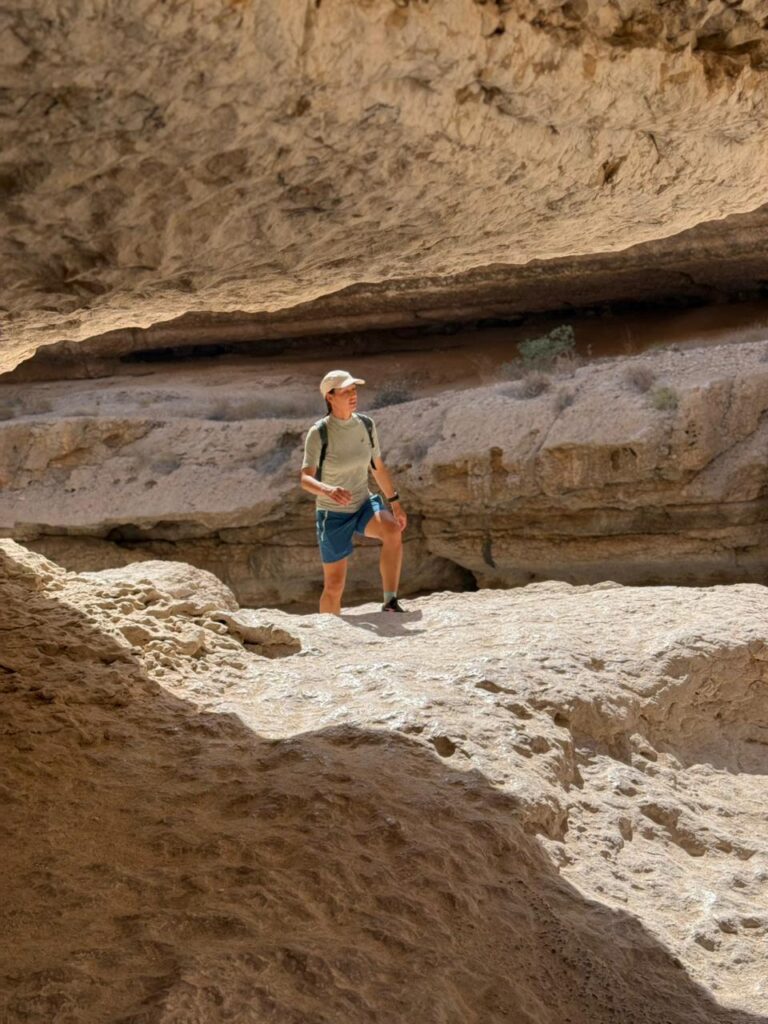
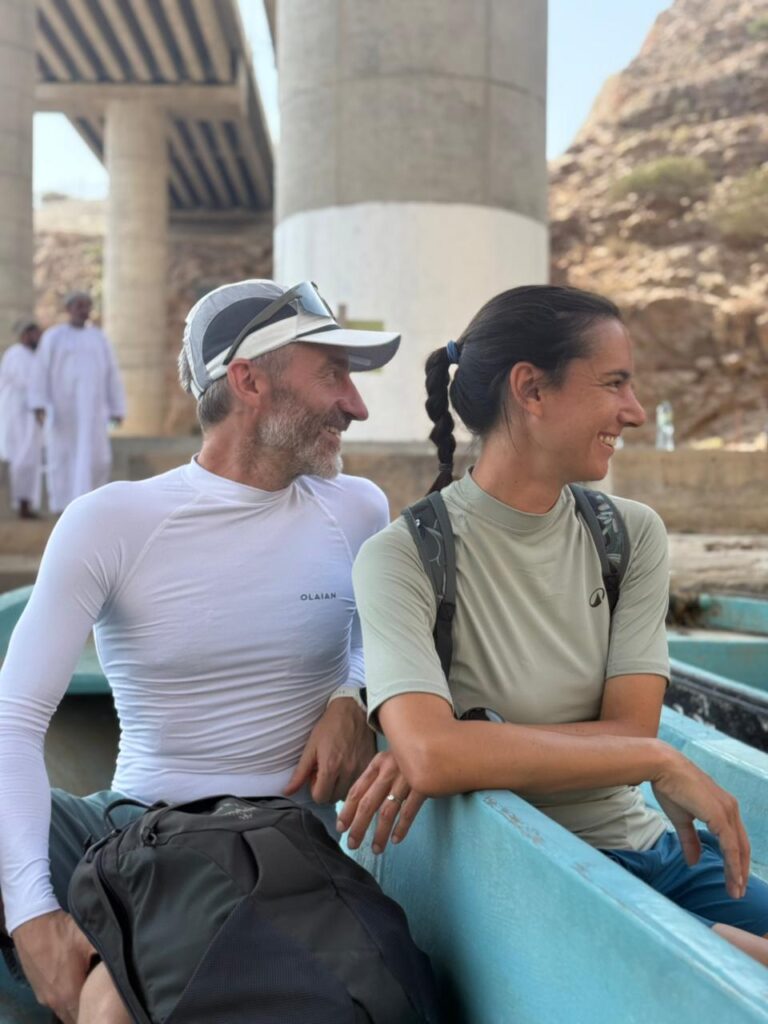
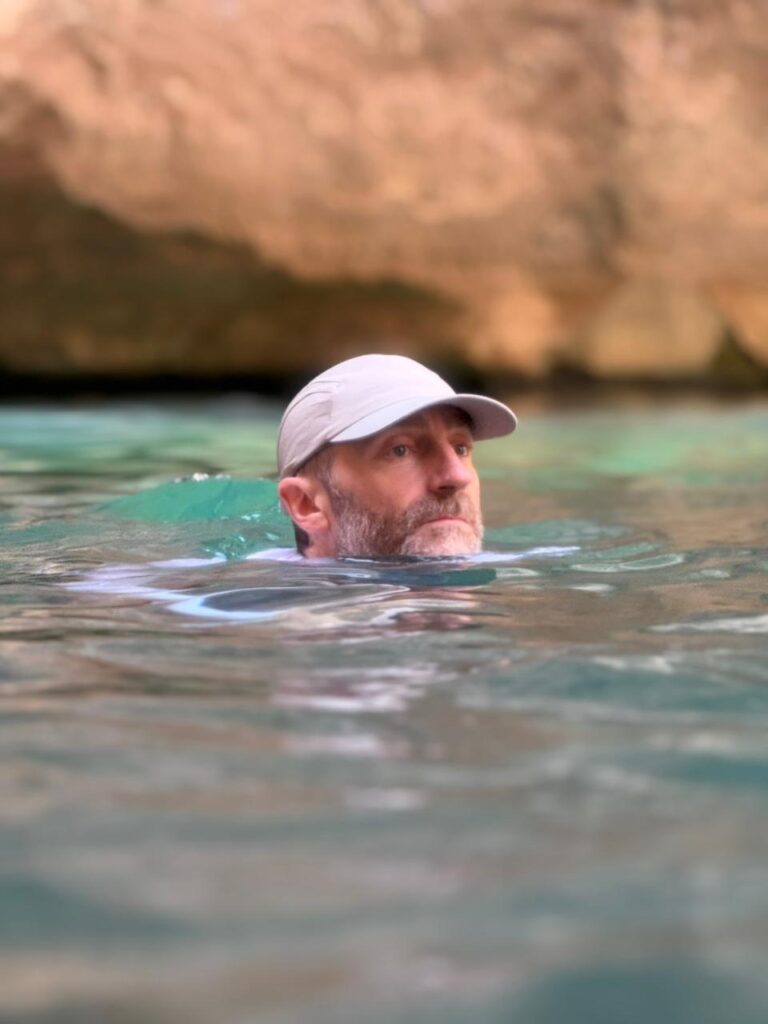
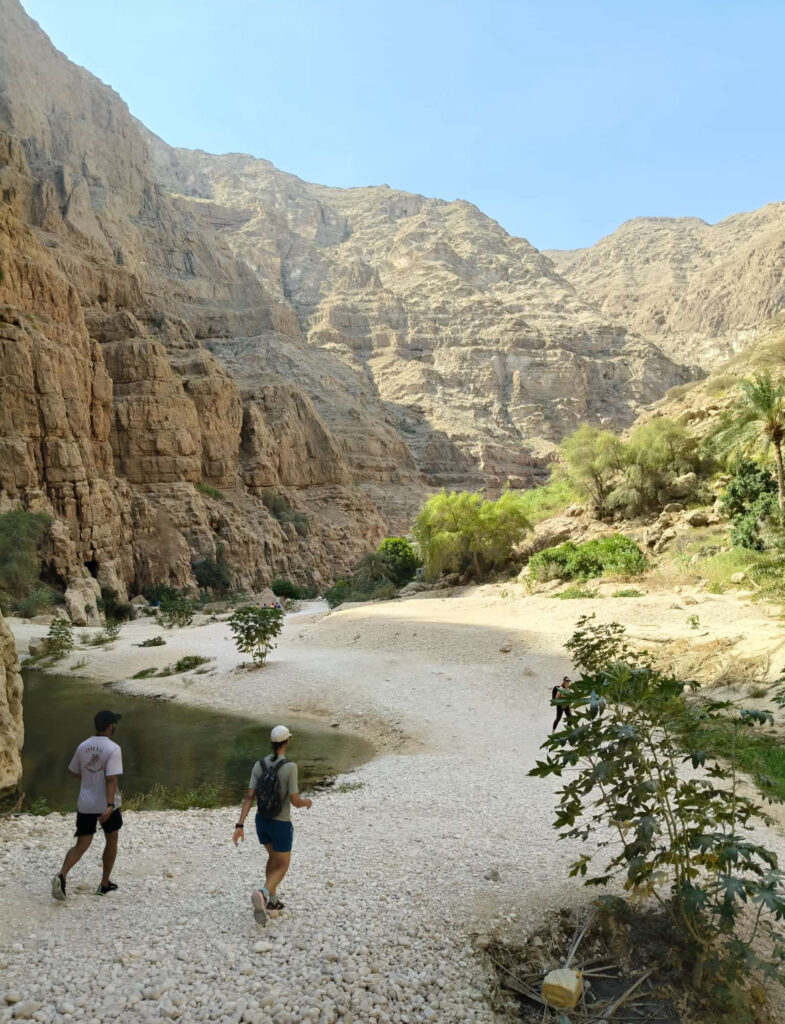
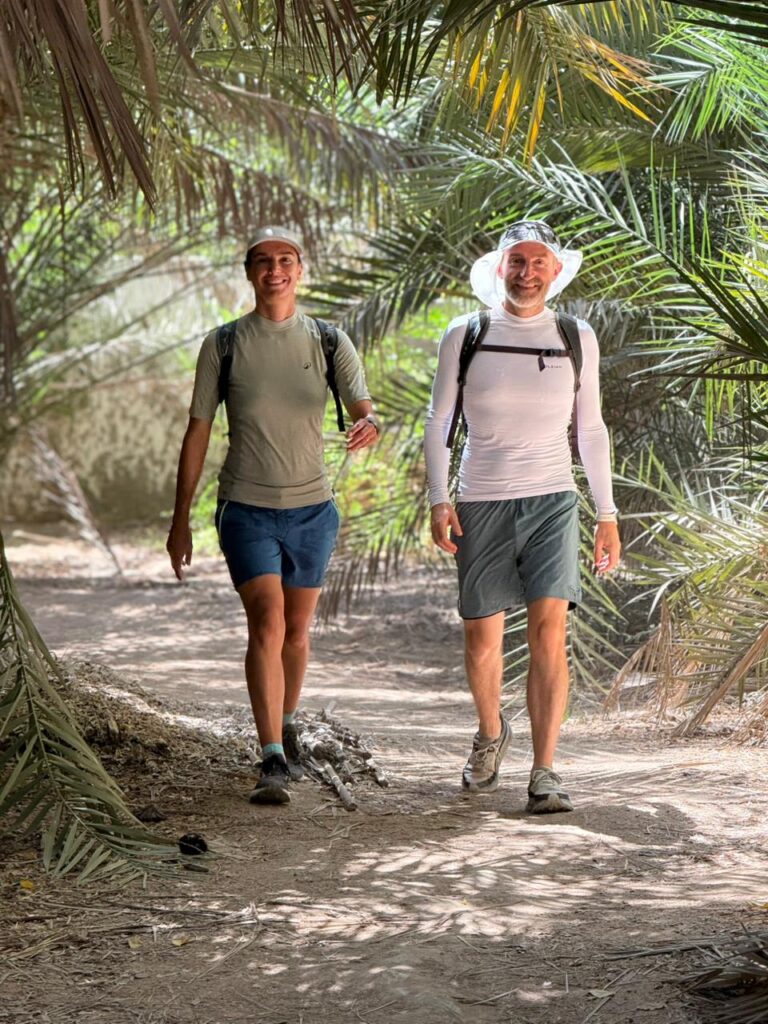
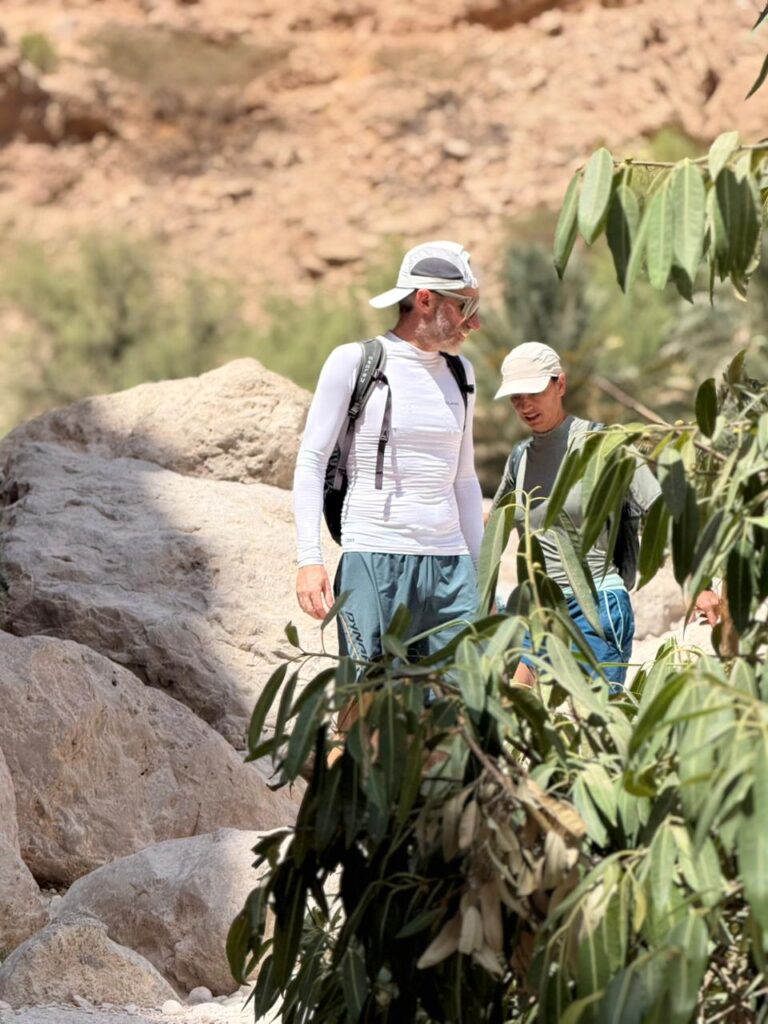
Our runners didn’t hesitate. Shoes on, straight into the cool water, laughter bouncing off canyon walls that rose hundreds of feet on either side. This is where the line between “trail running trip” and “adventure of a lifetime” disappears completely.
They swam in deep wadi pools, the water so clear you could see every rock on the bottom. The floated in the natural infinity pools, they explored wadis where the only sound was water trickling over stone and the occasional call of a bird echoing from the cliffs.
The contrast is what makes it magical, spending the morning working hard on technical terrain, muscles burning, sweat dripping, completely focused on the trail ahead. And then, suddenly, you’re floating in crystal-clear water surrounded by canyon walls, every ache soothed, every effort rewarded.
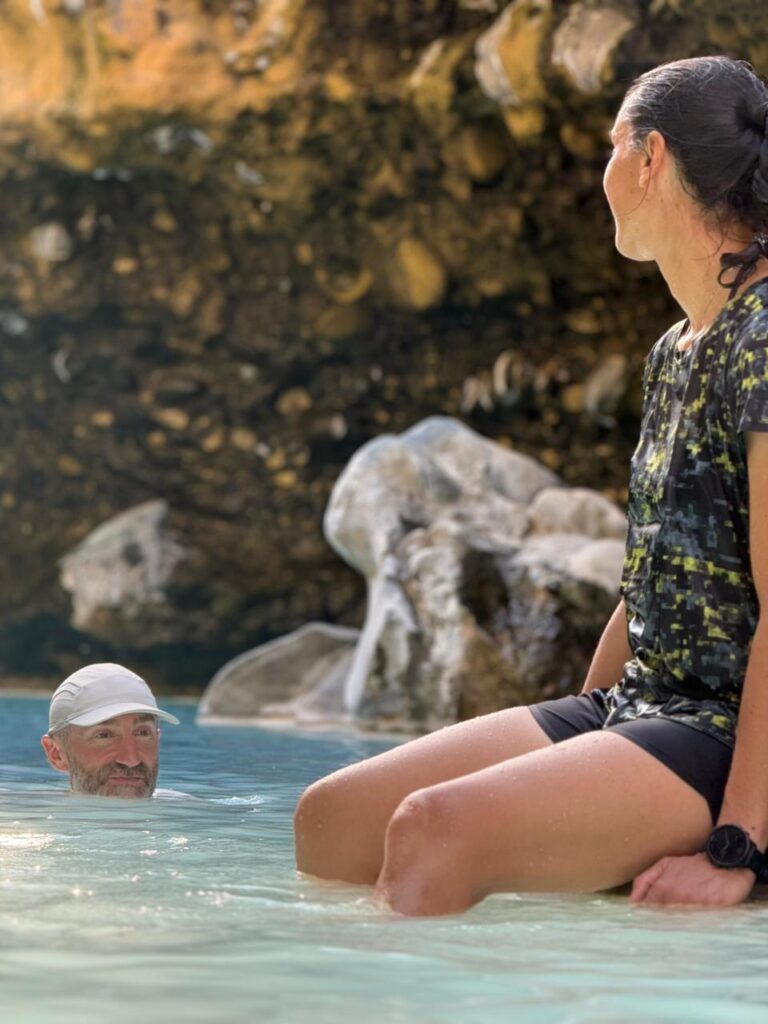
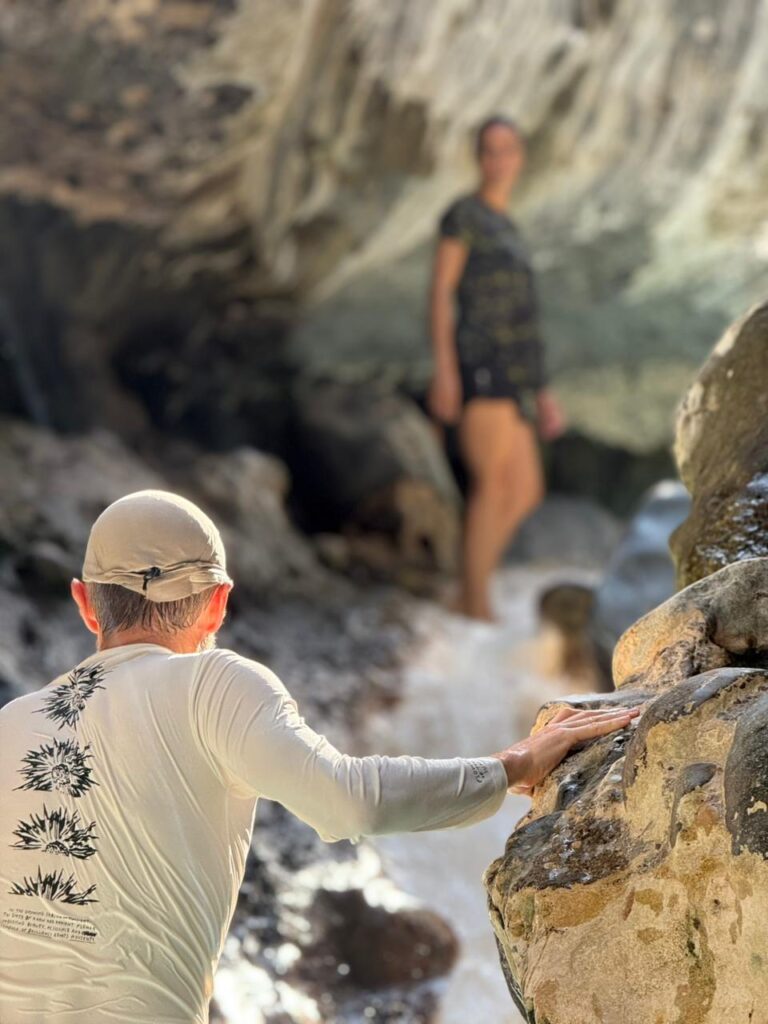
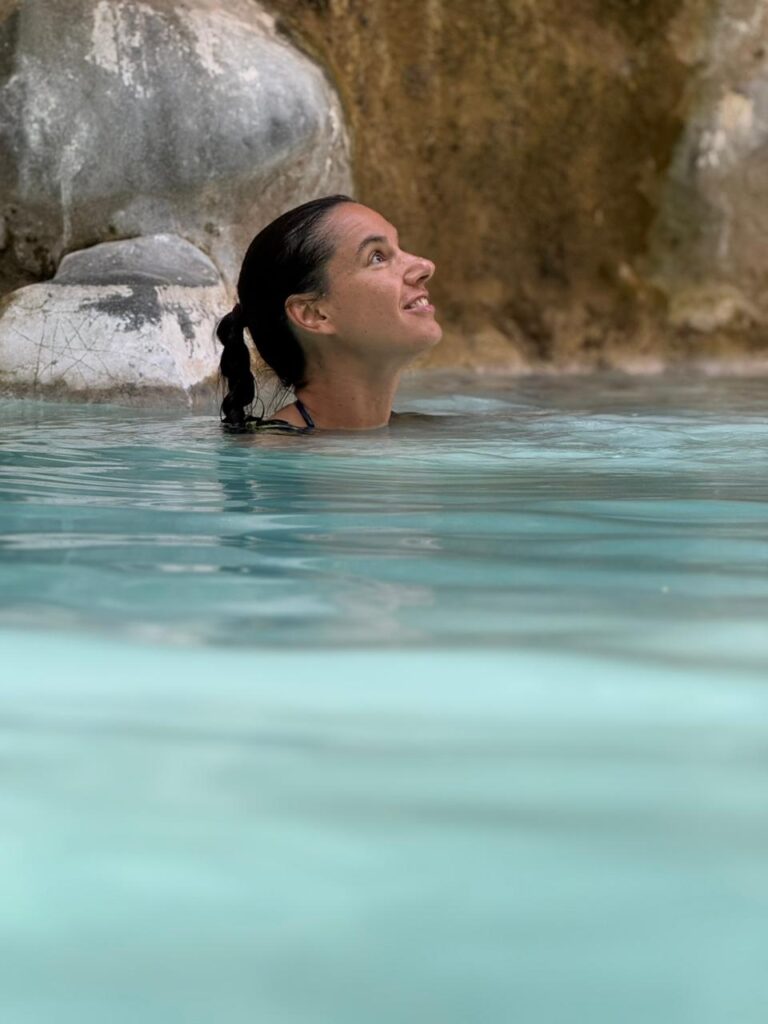
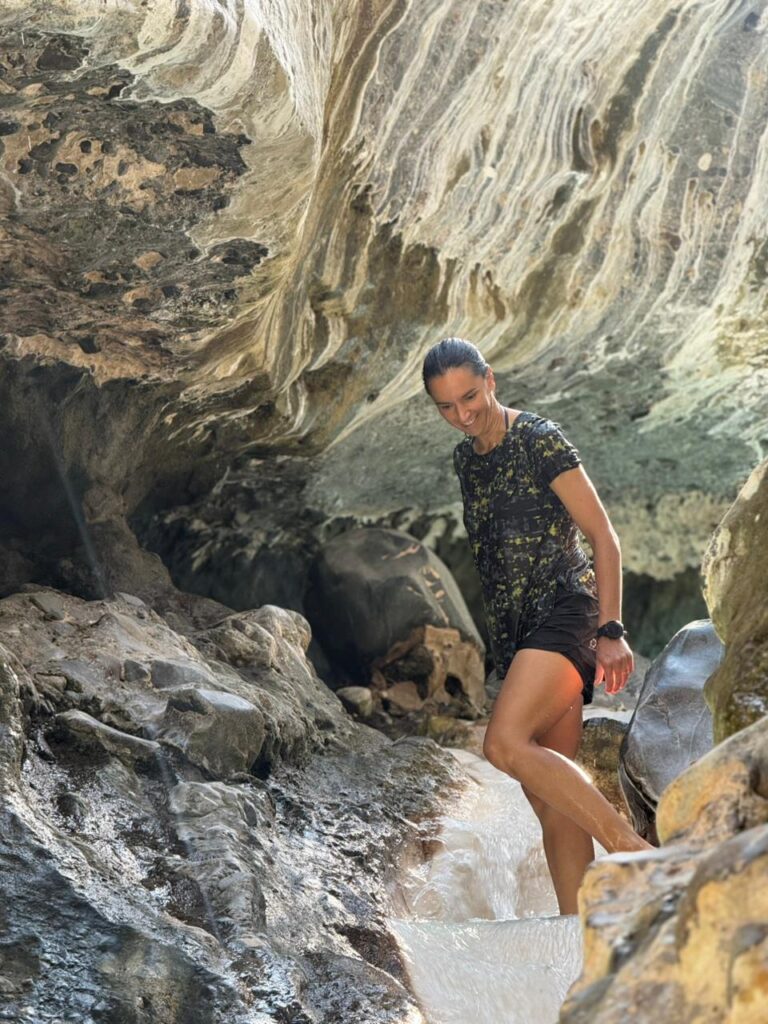
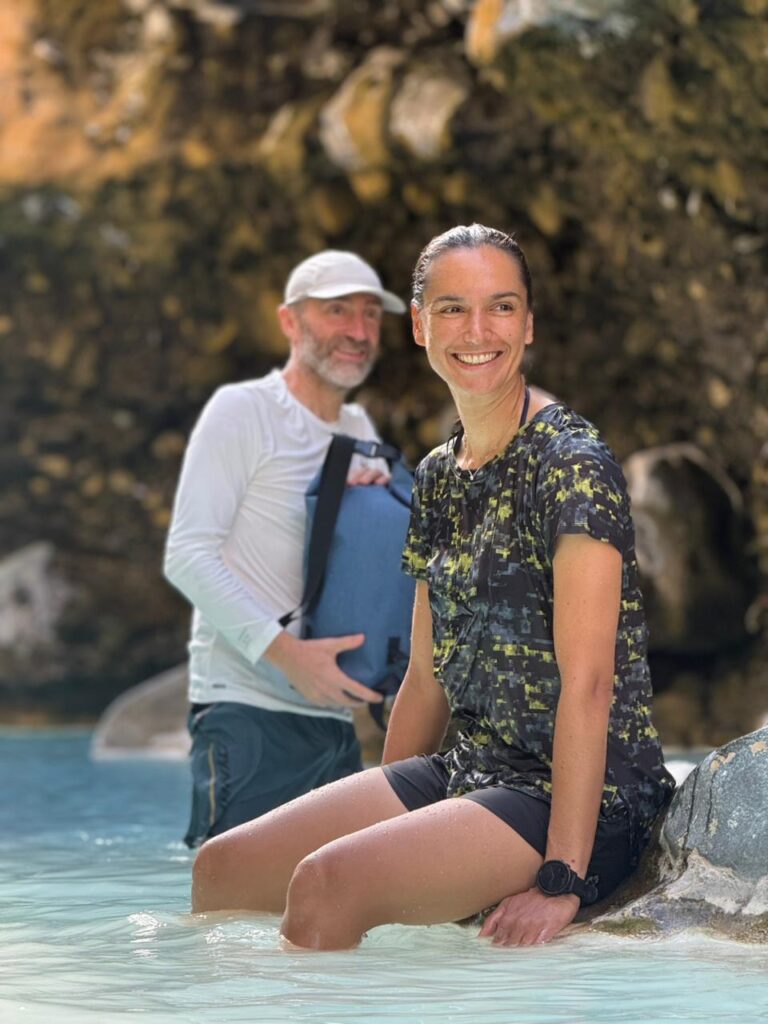
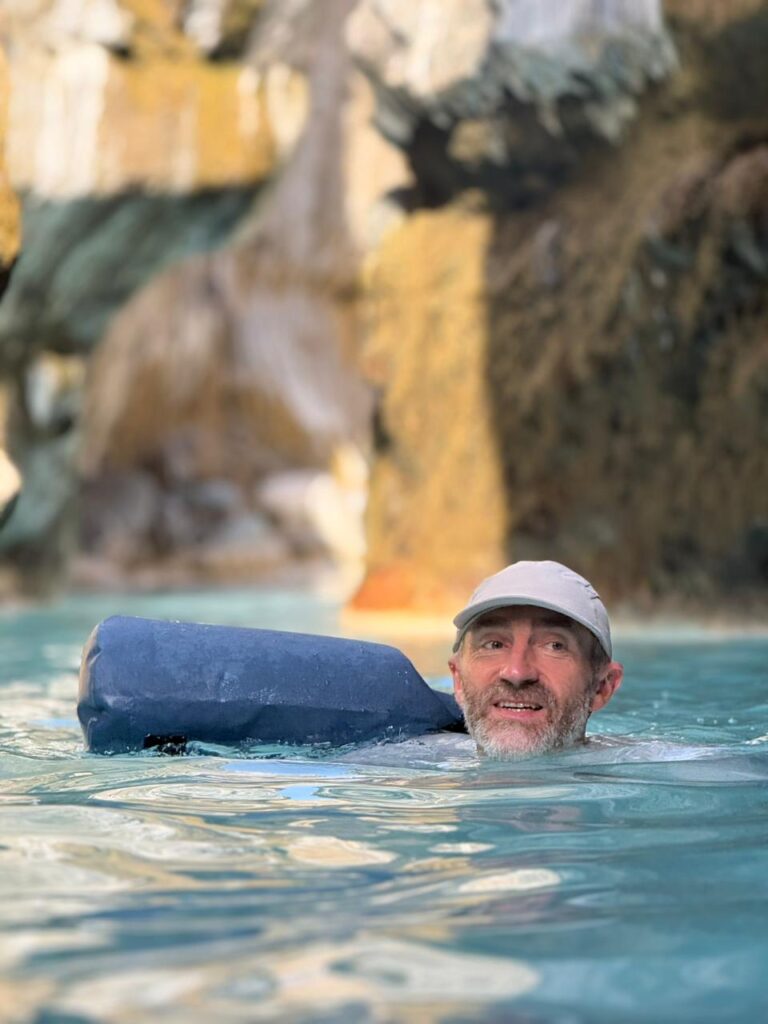
“The temperature of the water while you are [in it], it’s beautiful,” Francesca recalled. And Tomas added with a laugh: “We stayed there three hours!”
Moving gently through these natural wonders, discovering hidden corners and secret pools, your legs recovering while your spirit soars. It’s nature’s perfect recovery system, active enough to keep you engaged, gentle enough to let your body rebuild.
The Coast: Where Mountains Meet Sea
Oman’s coastline is very diverse, it can be the white-sand, palm-tree postcard coast but we were in this rugged, dramatic, honest black volcanic rock meeting turquoise water, fishing villages tucked into coves, trails that run along clifftops with the sea crashing below.
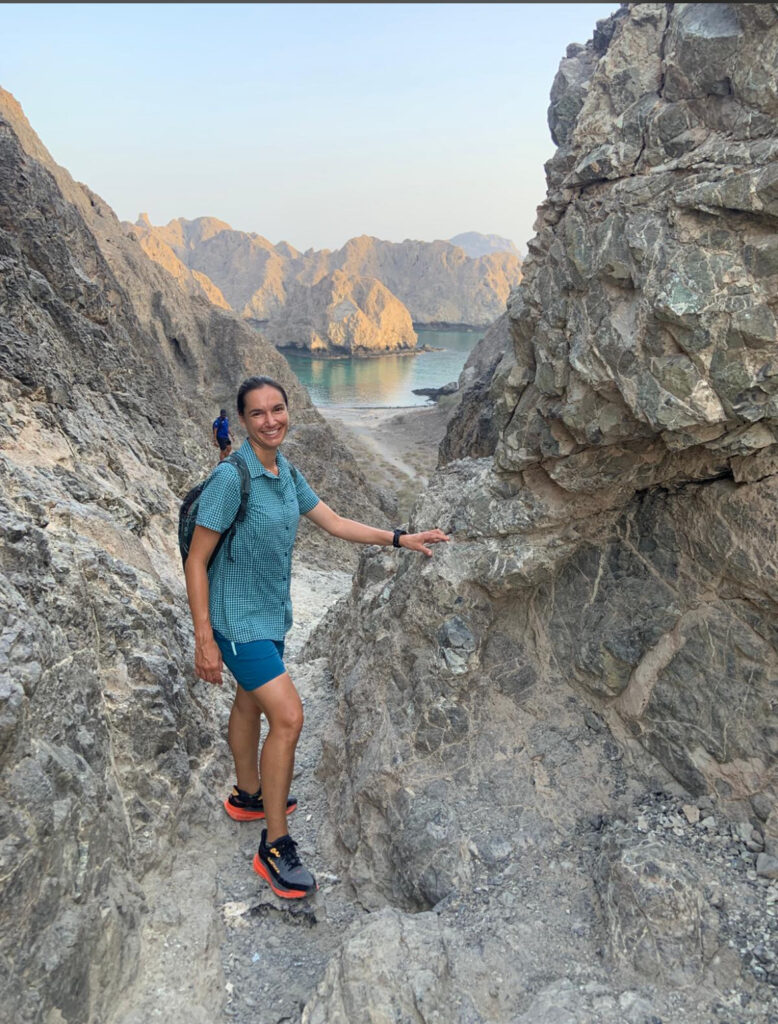
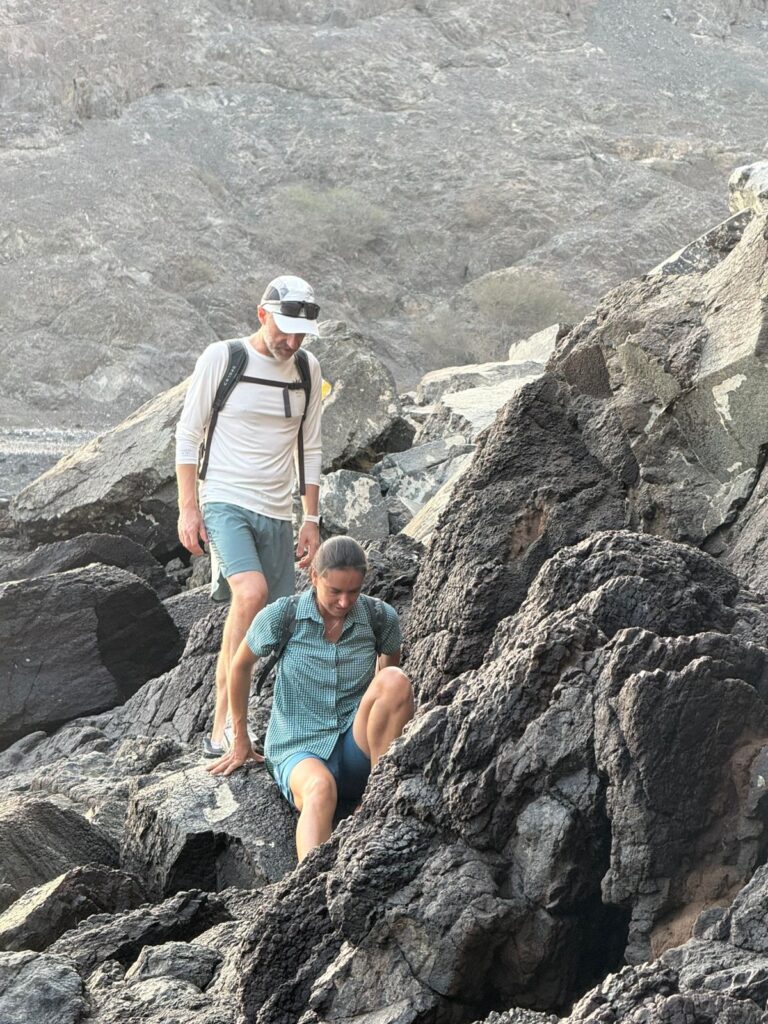
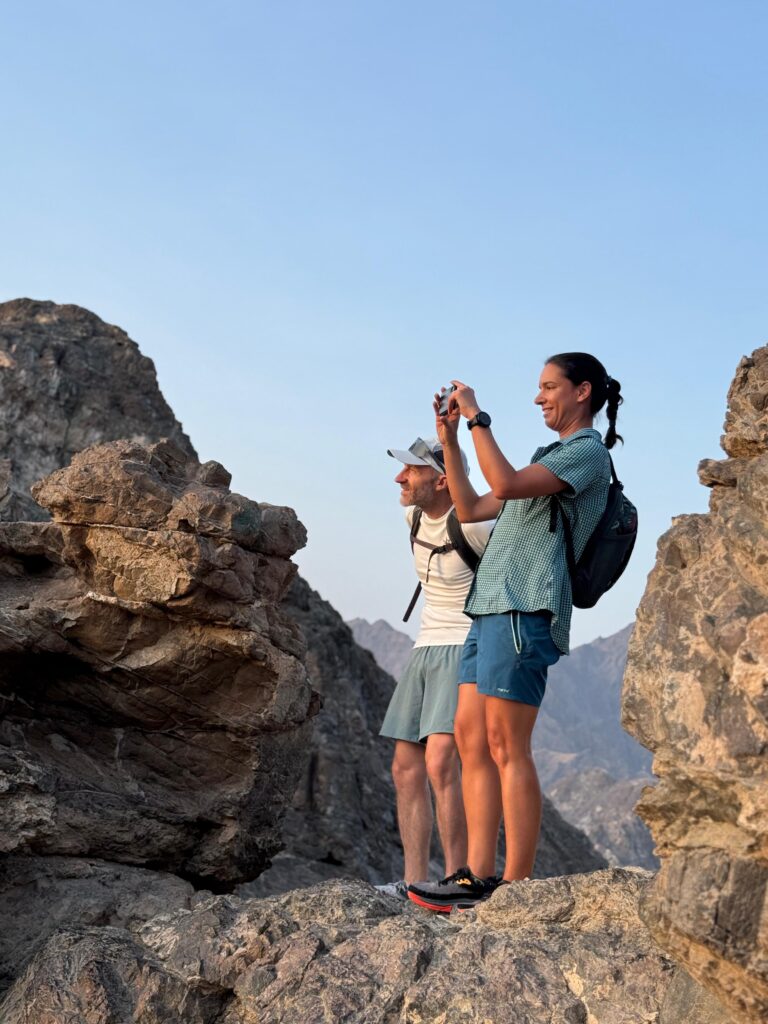
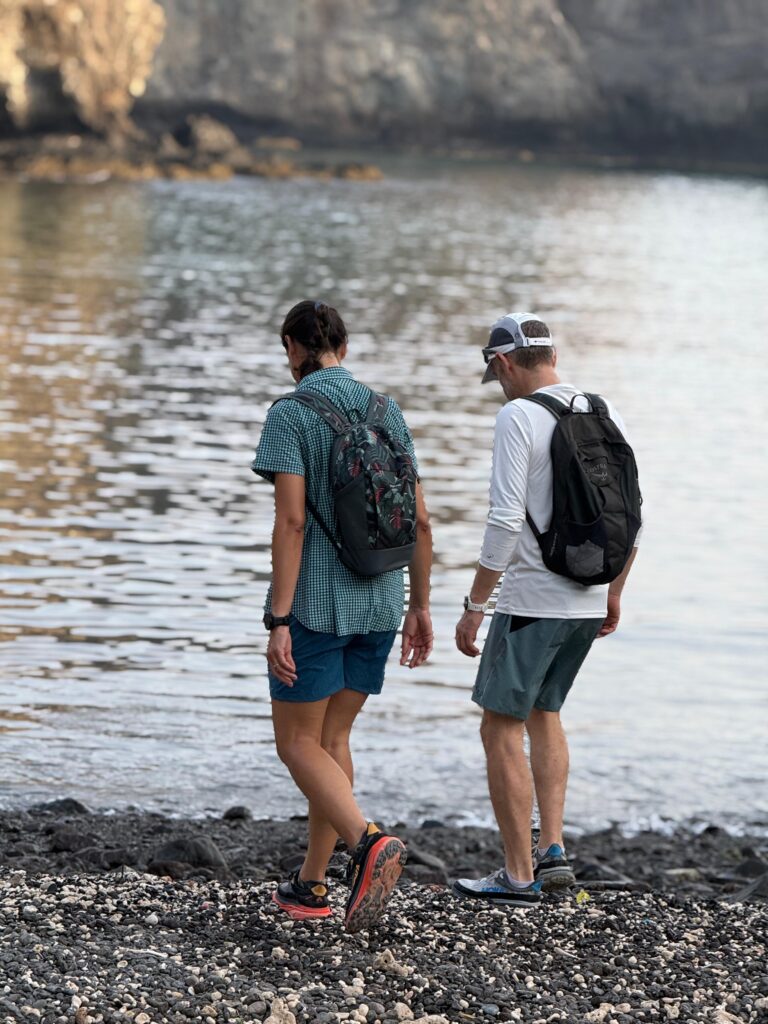
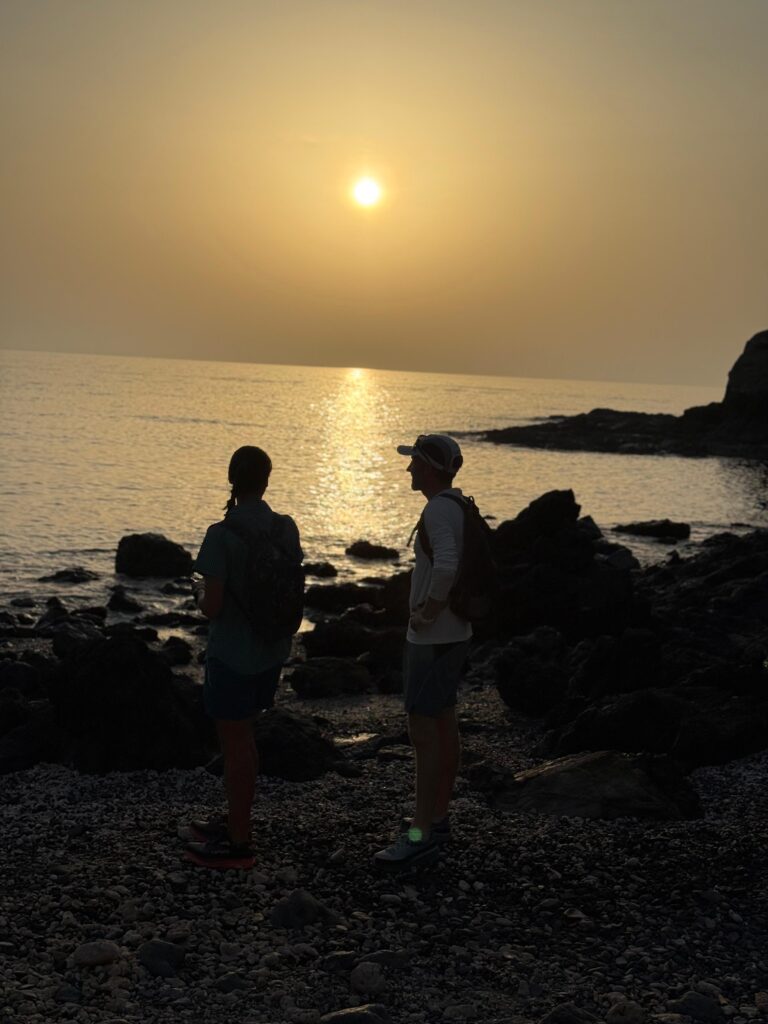
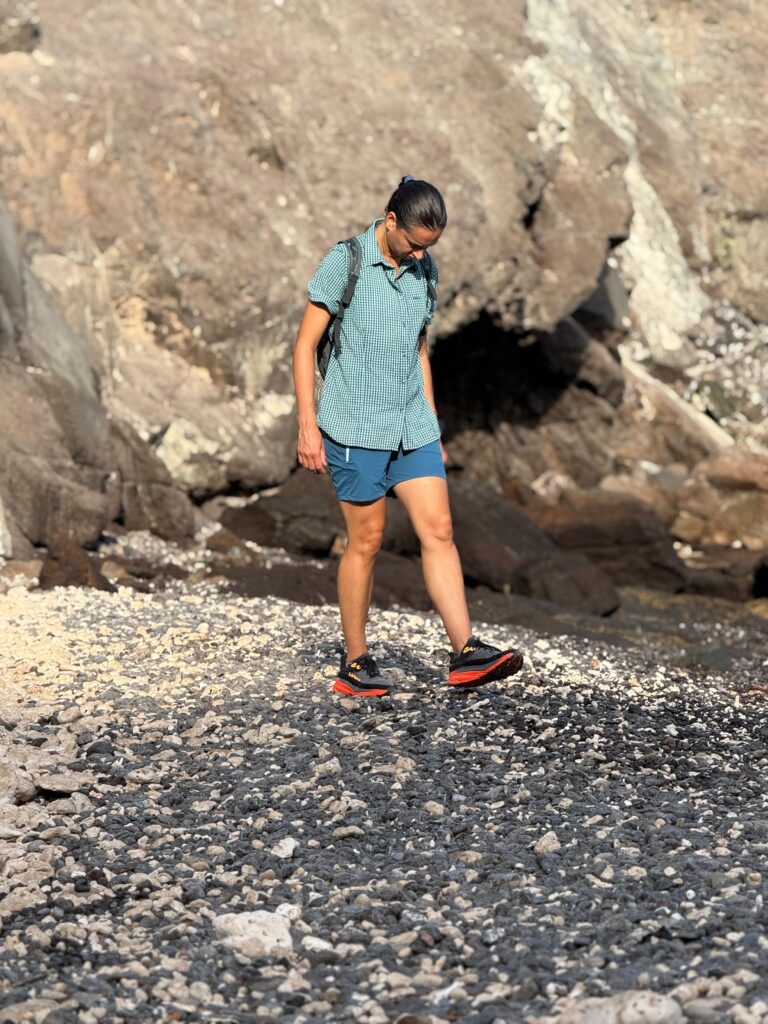
Our Sidab coastal hike began at sunrise, the air still cool, the sea calm. We moved between rocky beaches and cliff paths, stopping to swim when the heat built, the salt water washing away the effort. But the hike also gave the opportunity to create meaningful impact while spending time with Sidab Women.
Sidab Women is a community house where something special is happening. It’s a place where unemployed young women, mothers, and wives can learn new skills, earn their own income, and grow, all while keeping their families at the center of their lives. The house works as a creative business hub where seamstresses come together to swap ideas, share designs, and bring new products to life. What makes it unique? They’re taking traditional Omani materials and craftsmanship and giving them a fresh, innovative twist. It’s about honoring heritage while creating something new.
At its heart, Sidab Women is about flexibility and independence, giving women the chance to build their own path forward, on their own terms.
“People have stereotypes about Islam and Muslim culture. But as soon as you see women actively working to improve their lives and support themselves, something shifts. You start to see things differently.”
“We bought keychains from them as wedding favors for our guests. It was more than just a purchase, it became a meaningful part of our celebration and a memory we’ll always treasure.”

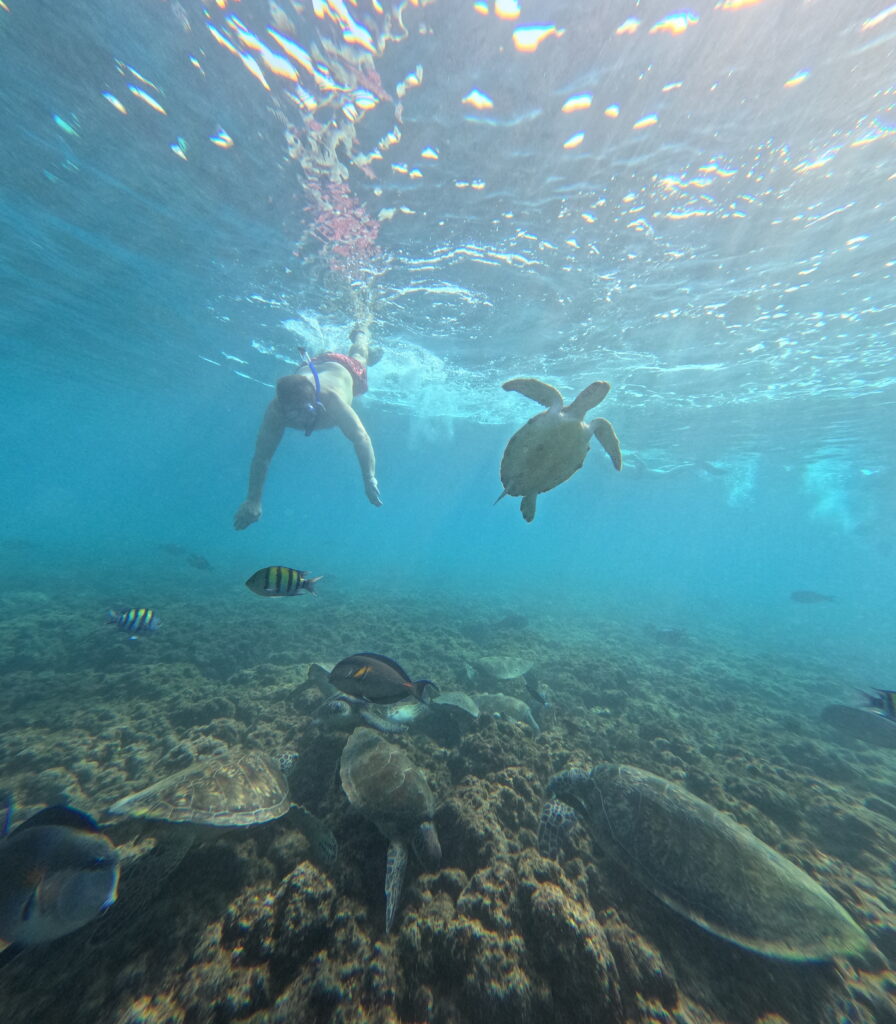
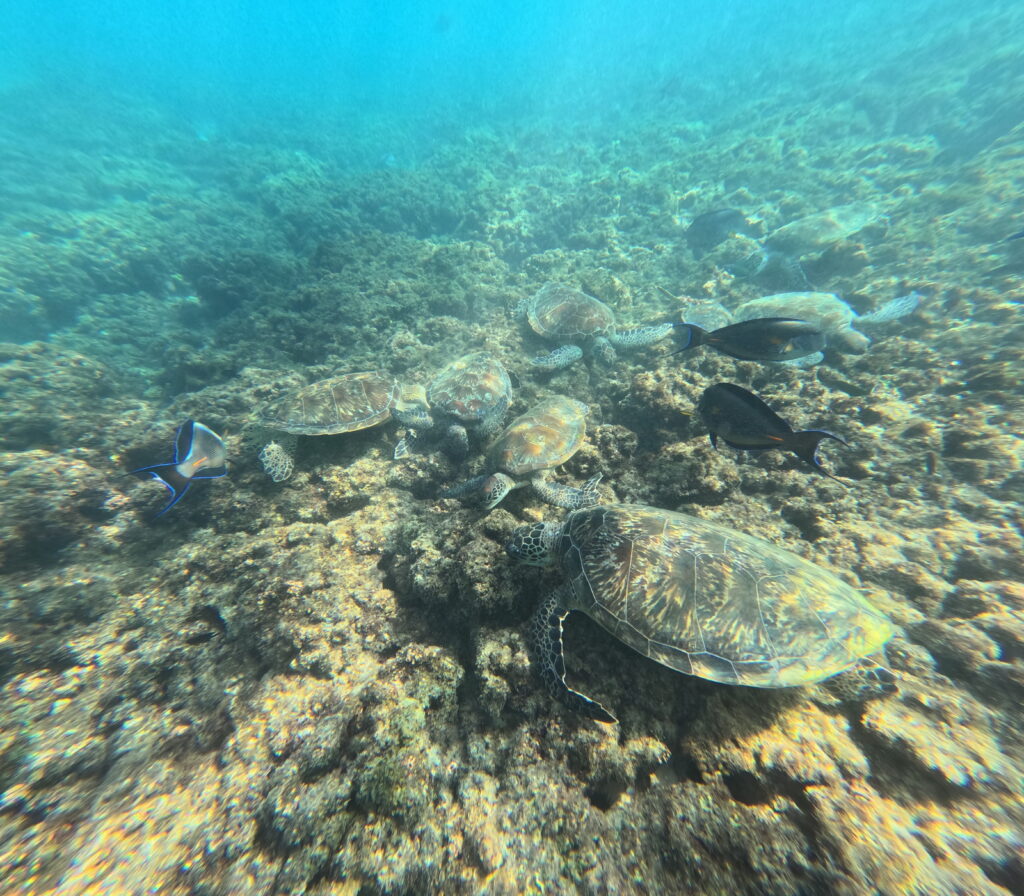
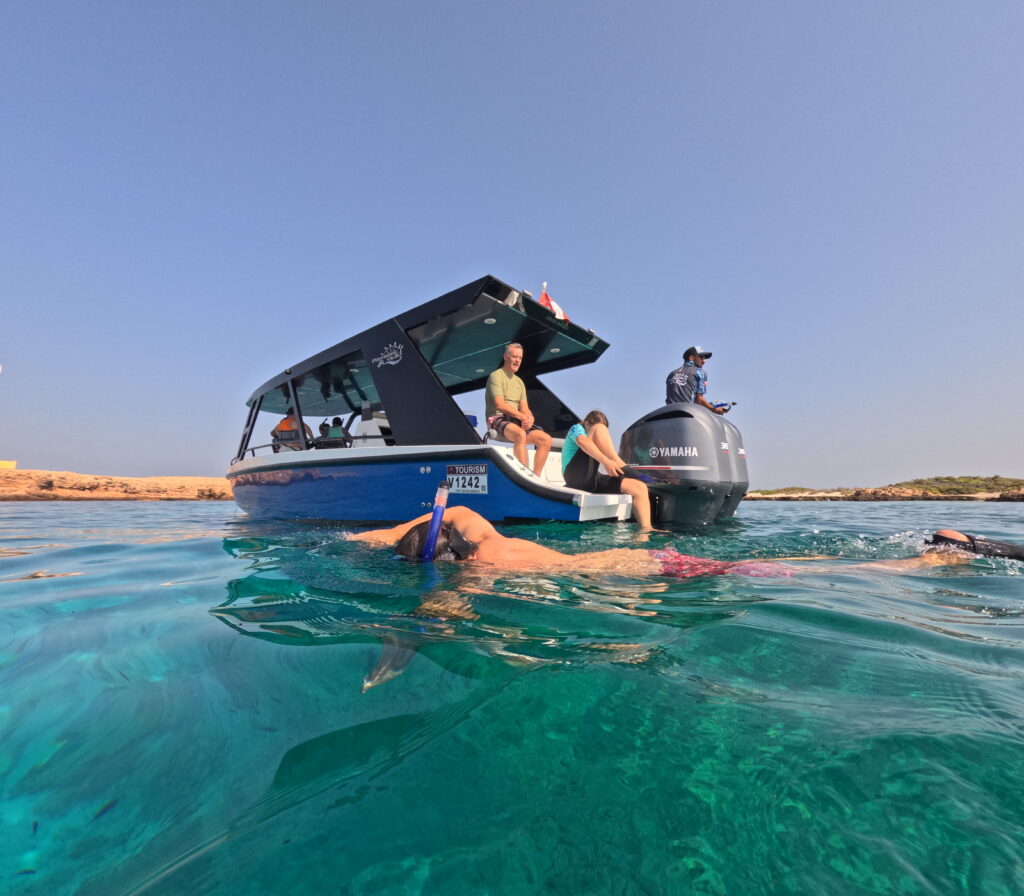
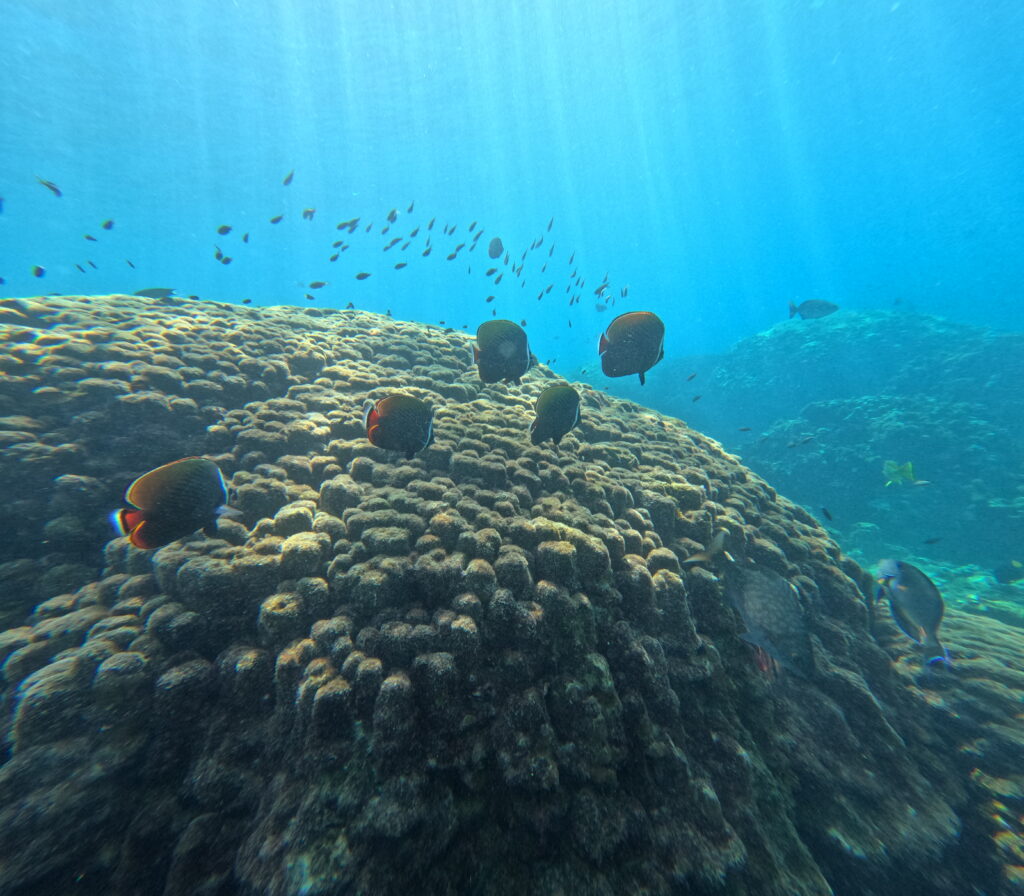
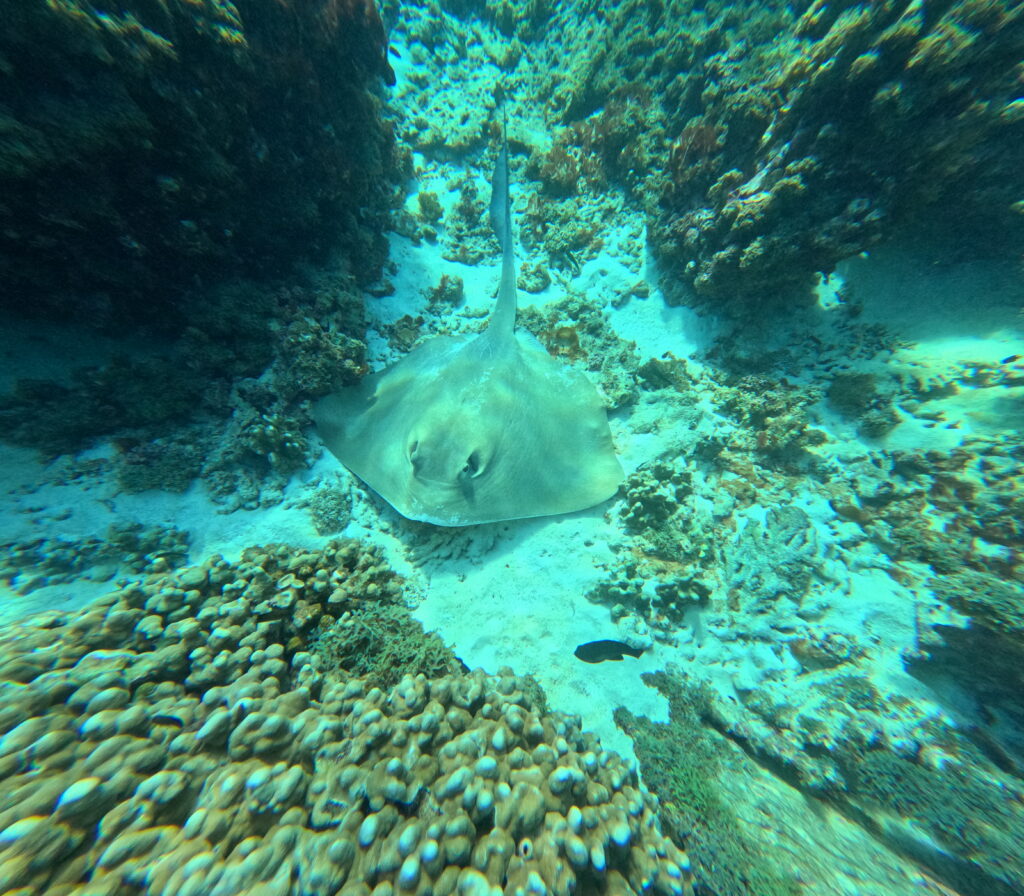
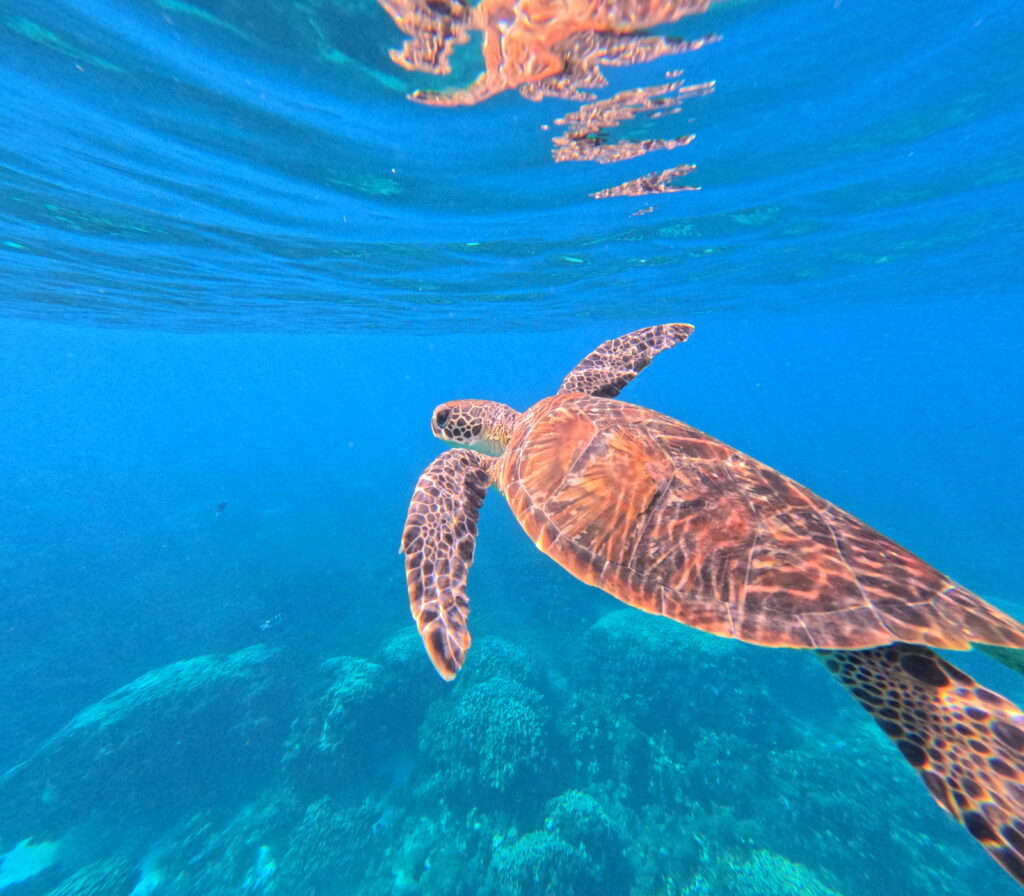
Days later, runners also relax snorkeling with sea turtles in the Daymaniyat Islands, of the world’s seven sea turtle species are found in Oman. Four of these species—the green, loggerhead, hawksbill, and olive ridley—nest on Omani beaches. The water in the Daymaniyat Islands was impossibly clear, teeming with colorful fish and coral. It was a different kind of adventure, quieter, more contemplative, but no less remarkable.
“For us, it was so nice,” Francesca said about the snorkeling experience. “We saw the sharks… Not the whale sharks, the reef sharks.”
The Rhythm of the Days
What made this trip special wasn’t just the running—it was the balance, and the personal touch of being gently immersed in local Omani culture.
Hard KM
Yes, we covered serious distance. Twenty kilometers through Jebel Akhdar’s technical terrain. Eighteen across desert sand under the climbing sun. Ten at dawn when legs were still tired from the day before. Fifteen through palm groves where the shade offered relief but the rocky paths demanded concentration. These weren’t nor easy runs, nor difficult, they were opportunities to cover distances on foot, and see and explore what normally you would not see with a traditional trip.
Some days you’d see you are faster pushing your limits, treating the terrain as a proper training challenge. Other days, more relaxed, talking and laughing, making the KM pass in conversation and shared discovery. The beauty of trail running is that it meets you where you are, and every level of runner found their place.
Slow Moments
Between the big running days, we slowed down deliberately. We hiked through villages at an easy pace, time to notice details: the way light filters through palm fronds, the intricate stonework of abandoned houses, the sweetness of fresh dates offered by local farmers. We visited the historic sites of Nizwa, wandering through the fort and souq at sunset when the light turned everything golden.
We spent afternoons at rest, recovering in guesthouses and camps, reading, napping, or simply watching the landscape change as the sun moved across the sky. This wasn’t wasted time, it was essential time. The kind that lets your body rebuild and your mind process the incredible things you’ve been seeing.
Some times in our trips, some runners take advantage of the optional massage services we offer, working out the knots from technical descents and sandy climbs during the free time built into our schedule. At this opportunity our runners simply sat with cold drinks, swapping stories from the trail, savoring that particular contentment that comes from having pushed yourself hard and now being able to truly rest.
Cultural Connections
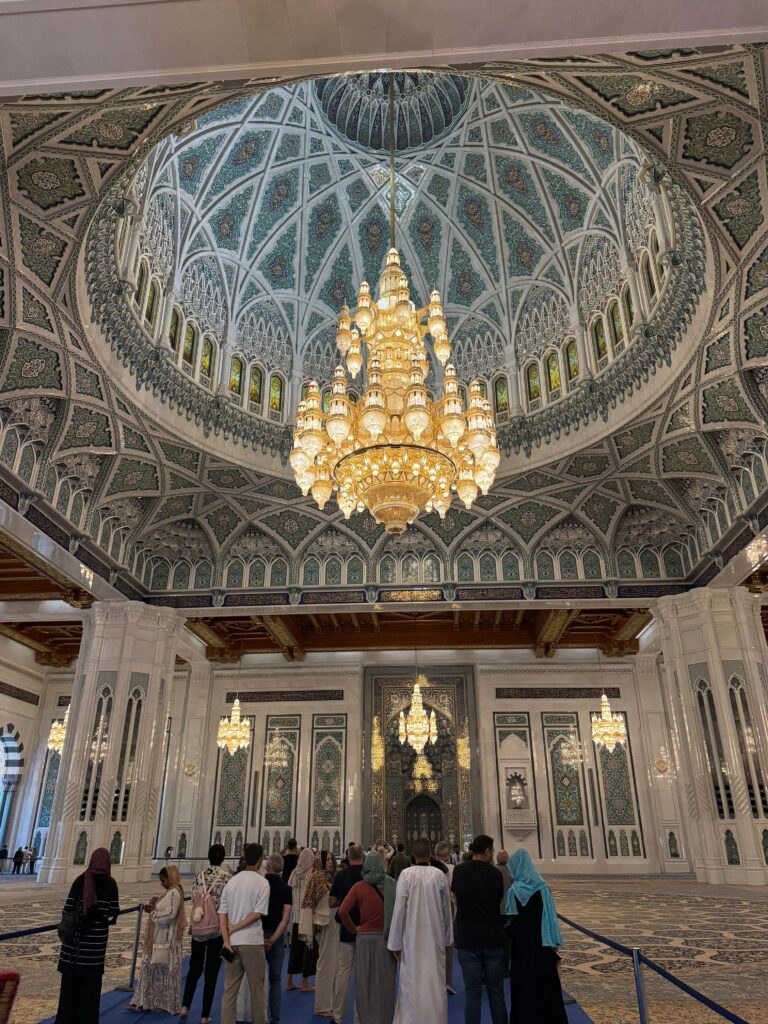
The Sultan Qaboos Grand Mosque stopped us all in our tracks. That ceiling—intricate geometric patterns surrounding a massive crystal chandelier, seemed impossible, like something from a dream. We walked quietly through the prayer hall, overwhelmed by the beauty and craftsmanship, the way light poured through the windows and scattered across the polished floors.
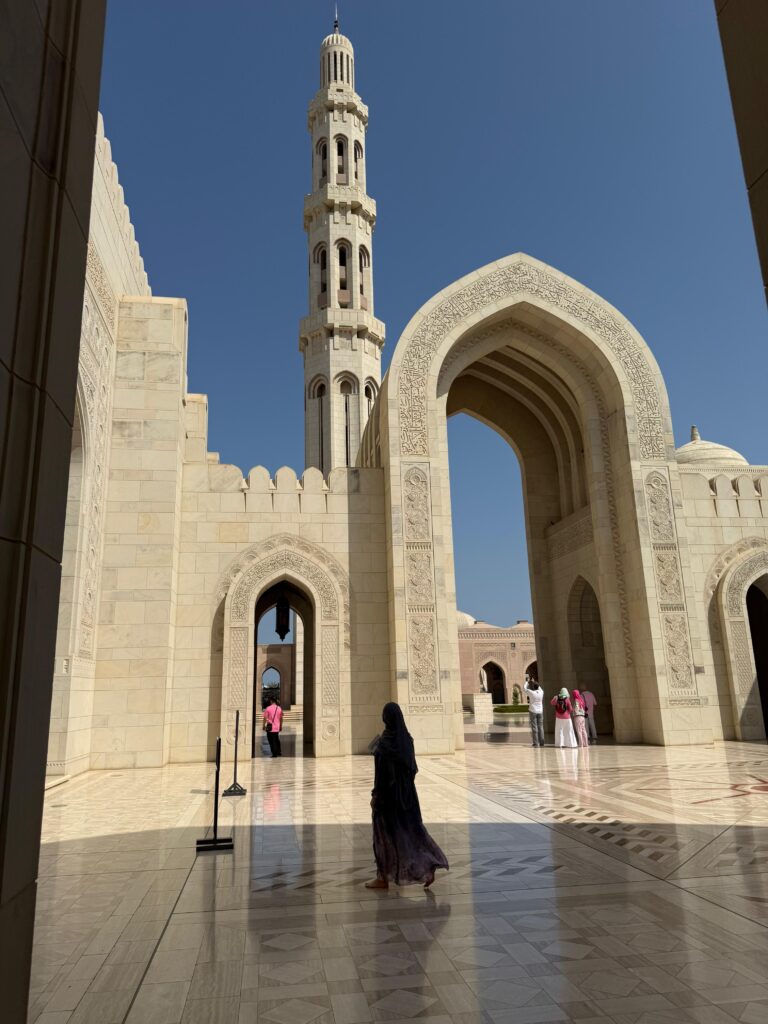
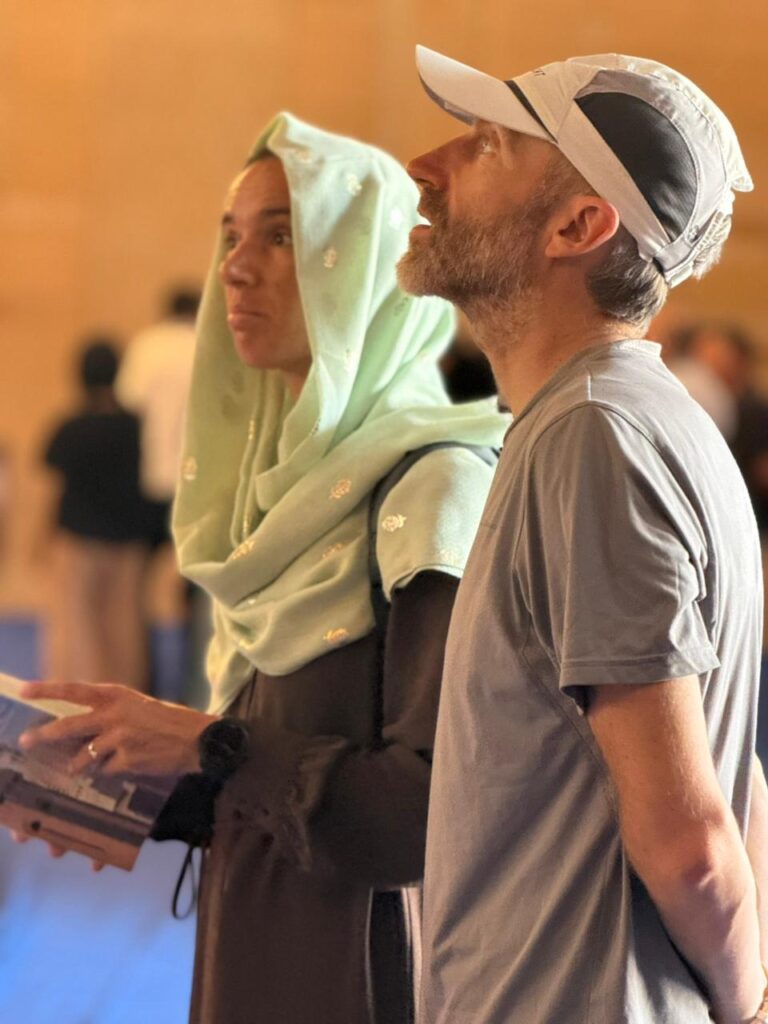
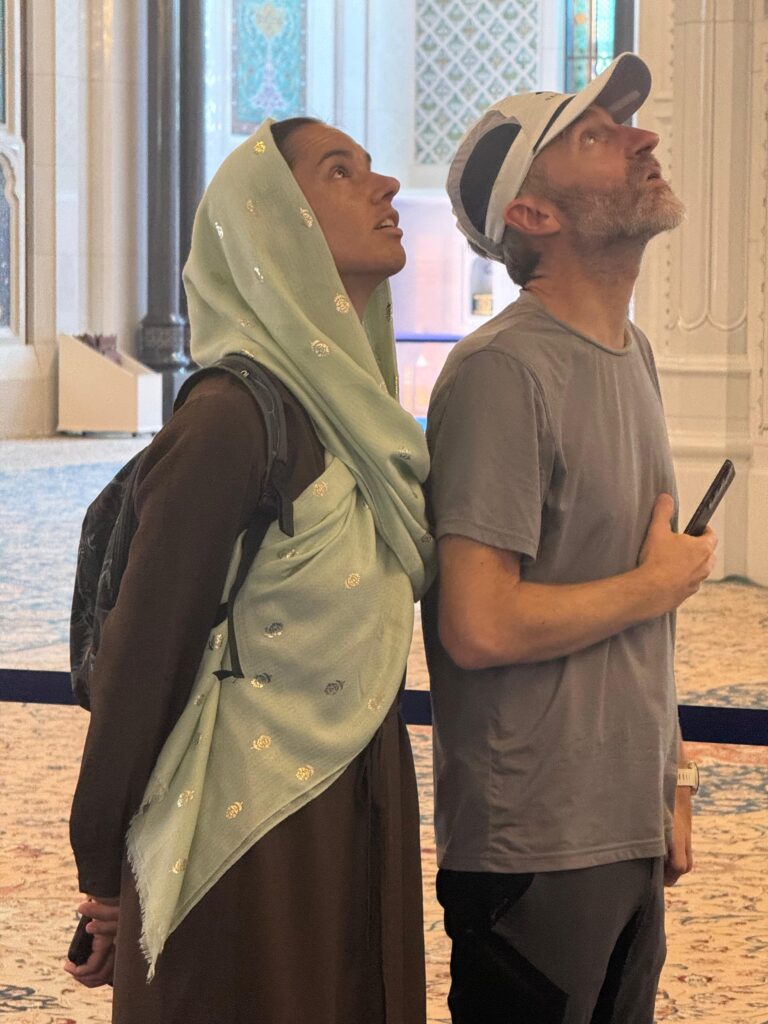
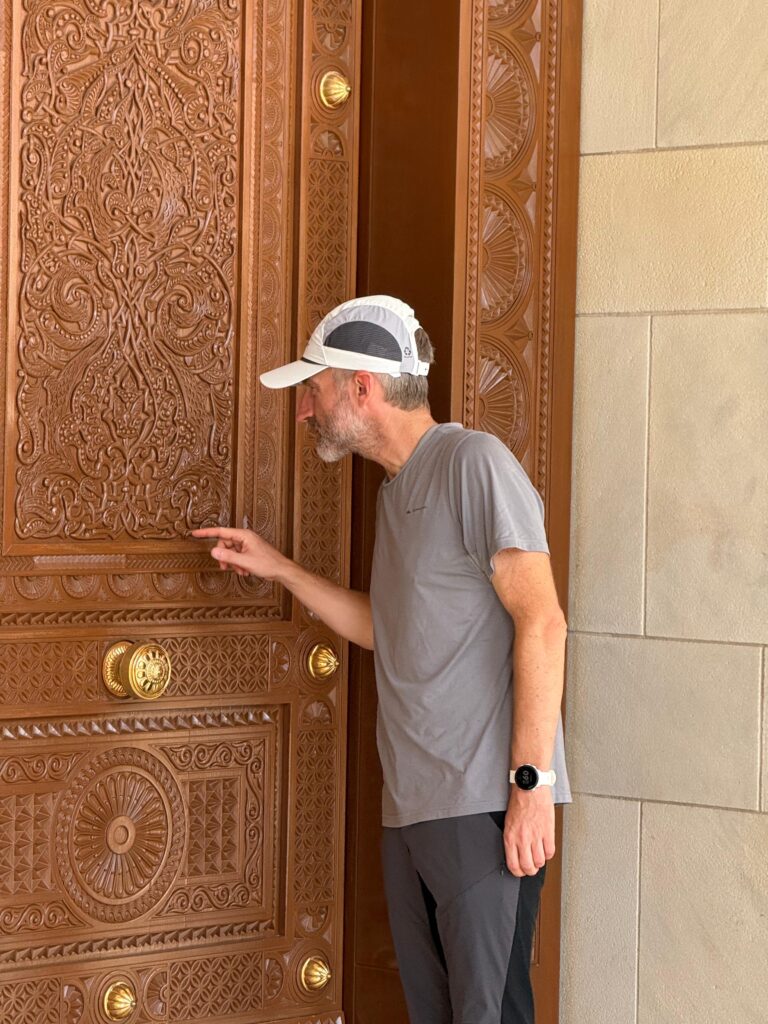
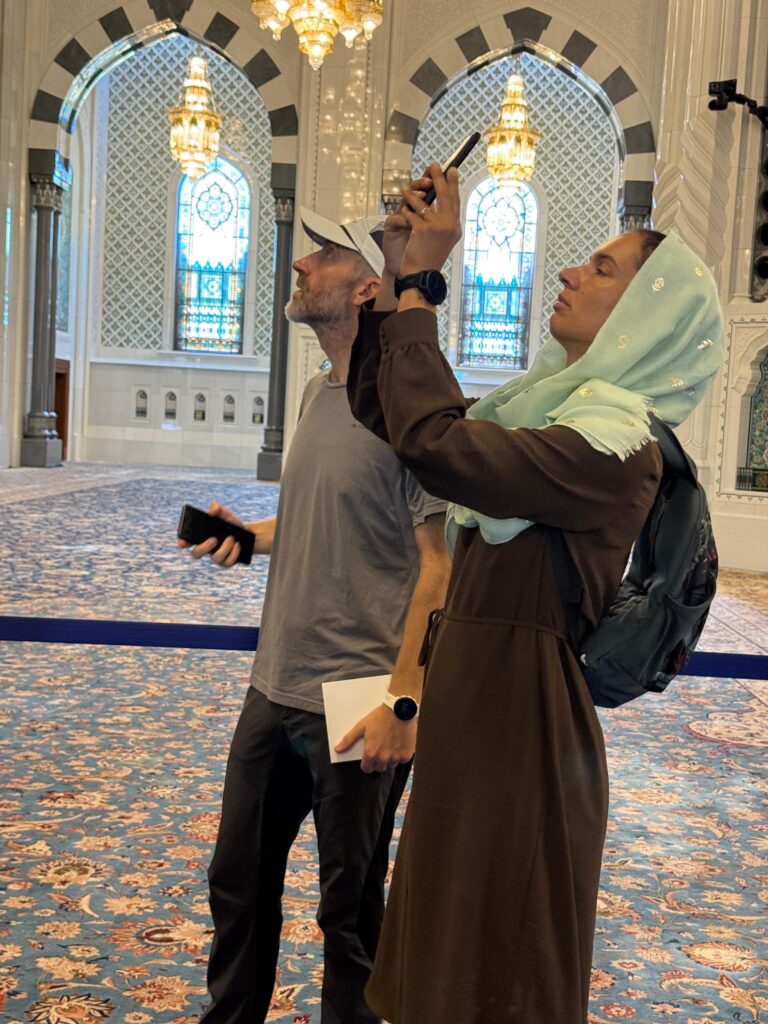
But the most memorable cultural moments were often the simplest: sharing meals eaten with our hands at local restaurants, learning to scoop rice and meat the Omani way. Sitting with villagers over tiny cups of strong, cardamom-scented coffee, the bitter-sweet taste becoming familiar and comforting. Exploring the Mutrah Souq’s maze of stalls selling frankincense, spices, and silver jewelry, the air thick with scent and sound and life.
Our local guides shared stories about life in the mountains, in the desert, along the coast, passing on traditions and insights that brought each landscape to life. Whether navigating mountain trails, setting up desert camps, or facilitating encounters with locals, they didn’t just show our runners Oman. They welcomed them into it, creating moments of genuine connection that transformed tourists into guests.
More Than Kilometers: The Connections We Build
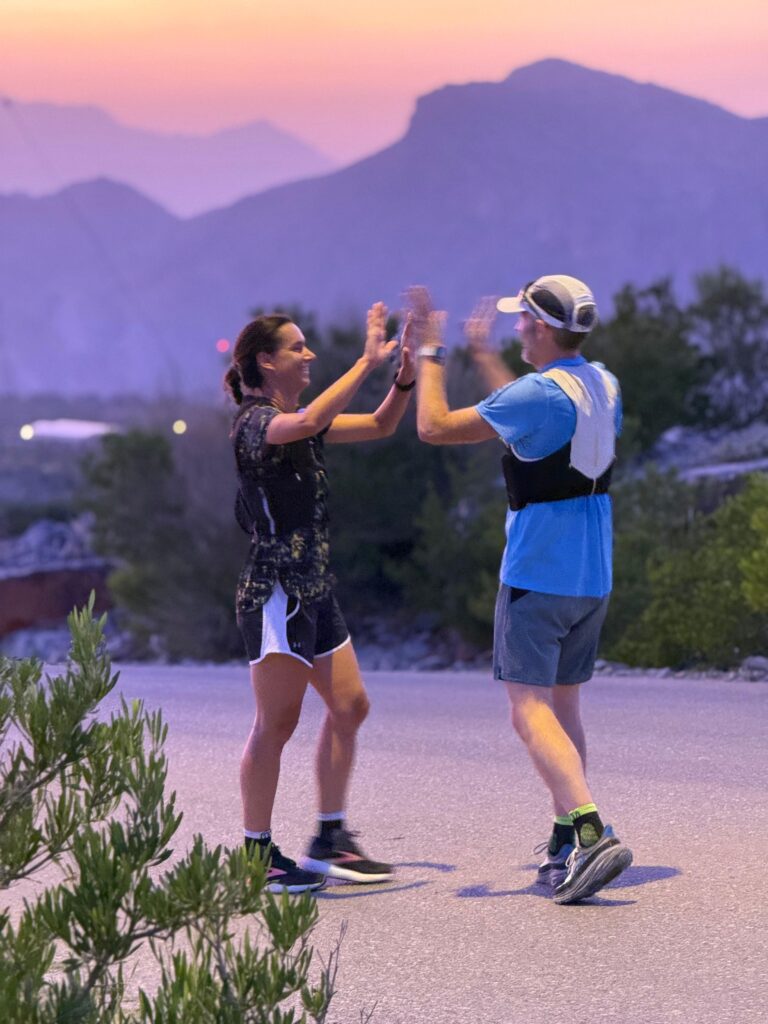
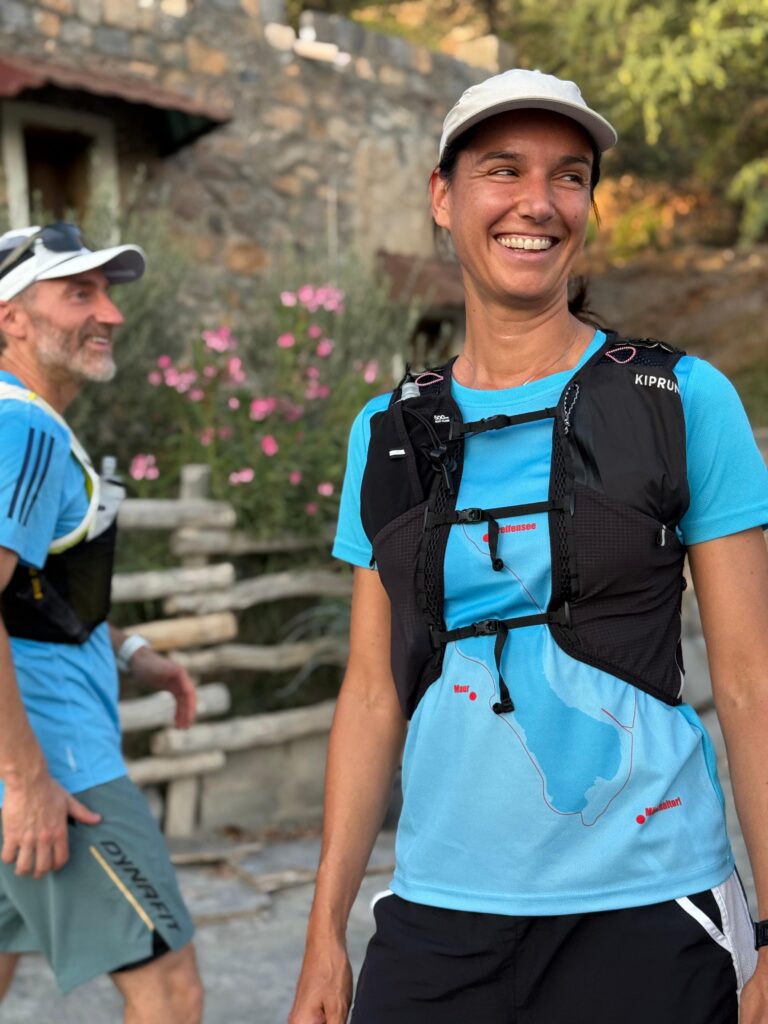
Our Swiss couple arrived together, but even they had different fitness levels and different expectations for the journey. Yet after that first big run, after sharing water stations and high-fives and the quiet triumph of finishing something hard, something shifted. They celebrated each other’s victories: nailing that technical downhill that had looked intimidating, powering up a dune that seemed impossible, simply showing up every morning ready to try again.
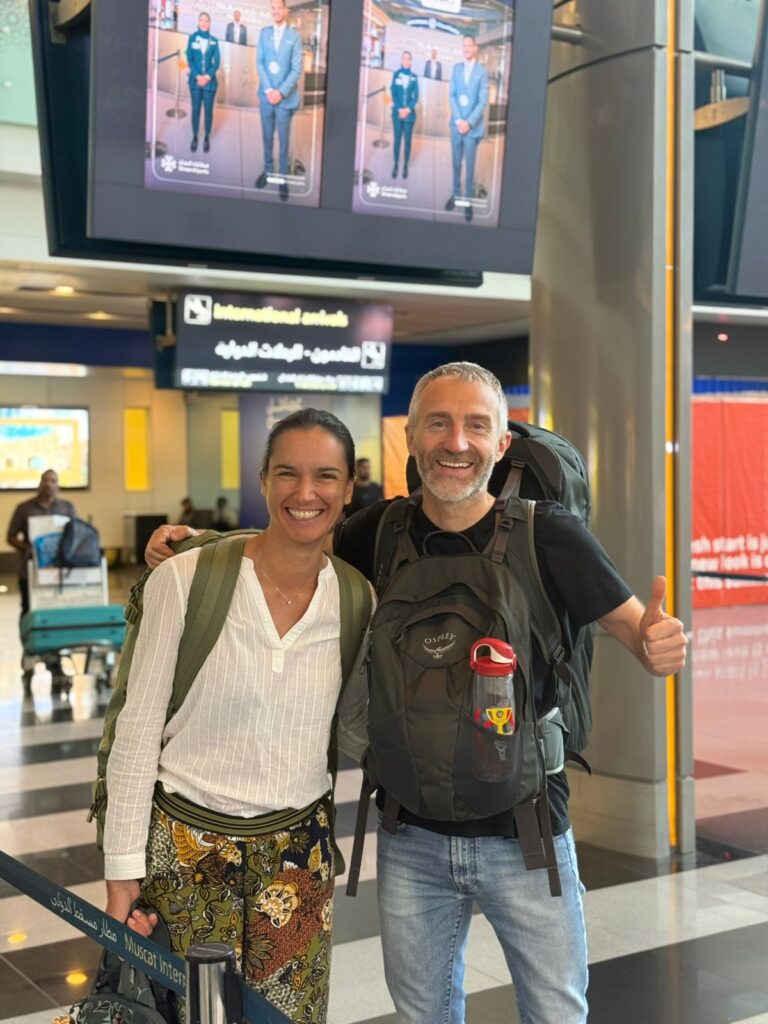
By the end, watching them say goodbye at the airport, you could see it, the kind of connection that only comes from shared adventure. When you’ve truly enjoyed a place, leaving becomes unexpectedly hard. They’d return home with photos and sore muscles, yes, but more importantly, with stories and memories that would last far longer.
What Our Runners Said
“We are very sorry to leave Oman and Haithan. We feel very privileged to have had this experience. Thank you!”
Rigel! Thank you so much for this wonderful trip and this unique experience, and from me too! Heitham’s company and professionalism, your support and courtesy are giving us something we’ll never forget! I’m already falling in love with the desert trail! Who knows, we might even try the Al Sharqyah Marathon in 2027!
Why Oman? Why This Way?
Because Oman offers something rare: dramatic, diverse terrain that’s still largely undiscovered by the trail running world. Because the culture is genuine and welcoming, with none of the over-tourism that’s changed other destinations. Because the weather from September to April is genuinely perfect for running, cool mornings, warm days, comfortable evenings.
But also because running is simply the best way to see a place. You move slowly enough to notice details, quickly enough to cover real distance. You feel the terrain in your legs and lungs. You earn every view, every swim, every rest.
The landscape changes constantly—mountains one day, desert the next, wadis and coast woven throughout. You’re never bored, never stuck in one environment long enough to take it for granted. Each morning brings new terrain, new challenges, new rewards.
And when you do it with expert local guides who know every trail intimately, with full support that lets you focus on the experience rather than logistics, with a small group of like-minded adventurers who become your trail family, with the right balance of effort and ease—that’s when a running trip becomes something more.
That’s when it becomes an adventure that changes you.
Your Turn
The trails are waiting. The wadis are full. The desert dunes hold perfect footprints just for a moment before the wind erases them and makes space for yours.
Whether you’re an experienced mountain runner looking for new terrain, an adventure traveler who happens to run, or someone ready to push beyond what you thought possible—there’s a place for you here.
Small groups. Expert guides. Mountains, deserts, wadis, and coast. Hard kilometers balanced with slow moments. Challenge mixed with culture. Twenty kilometers that test you. Ten kilometers that restore you. Eighteen kilometers that humble you. Every single one worth it.
This is Oman. This is trail running, reimagined.
Your adventure awaits.
Upcoming Departures 2025-2026
January-February 2026
- 24 January – 01 February 2026 — Available
- 07-15 February 2026 — Available
March 2026
- 07-15 March 2026 — Available
- 28 March – 05 April 2026 — Available
How It Works: We form groups with a minimum of 4 runners. Once we have 4 confirmed registrations, we’ll notify you that the trip is guaranteed—then you can book your flights and make your first payment to secure your spot.
For full itinerary and booking: www.tayirdestinations.com
Tag someone who needs this adventure. 👇
#TayirDestinations #TrailRunningOman #RunOman #TrailRunning #AdventureTravel #Oman #DesertRunning #WadiLife #GuidedTrailRunning #RunTheWorld #MountainRunning #TrailRunningHolidays #AuthenticTravel